

Bone Graft for Dental Implant Thornhill: What It Is, Why It Matters, and What to Expect
A bone graft for a dental implant is a routine procedure performed regularly in dental offices by qualified surgeons — not the lengthy, risky ordeal many patients fear.
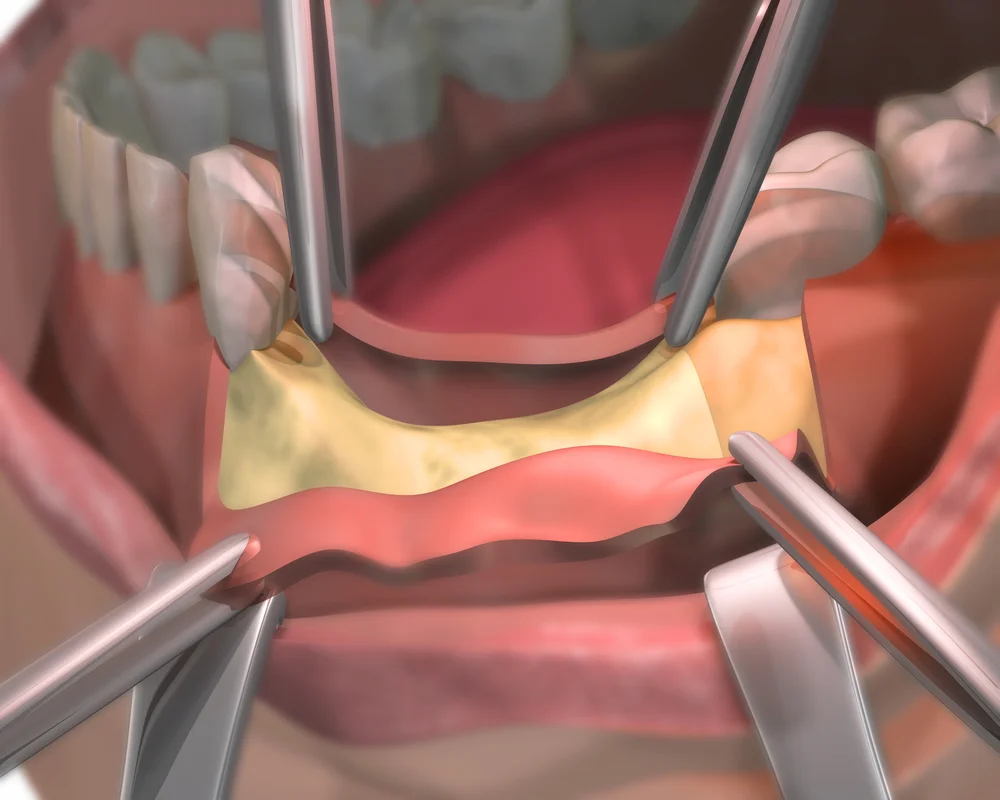
At MiNa Family Dentistry, 7191 Yonge St Unit 205, Thornhill, bone grafting is performed by Dr. Mehdi Adibrad — a dental surgeon with an MSc in periodontics and more than 10 peer-reviewed publications in implant and periodontal science. This page explains why bone grafting is sometimes necessary, what the different types involve, what recovery looks like, and why the outcomes, when done right, are predictably good.
Why Does Bone Loss Happen in the Jaw?
The jawbone is maintained by the stimulus it receives from tooth roots. Every time you bite and chew, the roots of your teeth transmit forces into the surrounding bone, signalling it to stay dense and healthy. Remove a tooth, and that signal stops — the bone in that area begins to resorb, shrinking in height and width over months and years.
For a dental implant to succeed, the titanium post needs sufficient bone to fuse with through osseointegration. If the bone is too thin, too short, or too porous, the implant will not have a stable foundation. A bone graft builds that foundation back up.
- Tooth extraction — even a single extracted tooth causes measurable bone loss within the first 6 to 12 months if not grafted
- Gum disease (periodontitis) — destroys the bone that supports teeth, often leaving reduced bone volume behind
- Trauma — injury or fracture can damage bone directly
- Long-term denture wear — conventional dentures accelerate resorption through pressure on soft tissue
- Dental infections — abscesses or cysts can destroy localized areas of bone
Types of Bone Grafts Used in Dental Implant Dentistry
Dr. Adibrad selects the graft material based on the location, the amount of bone needed, and the patient's overall health and preferences. Most routine bone grafts use either an allograft (processed human donor bone) or a xenograft (processed animal bone). Both are processed to remove all cellular material, leaving only the mineral scaffold. They are safe, widely used, and backed by extensive research. The Canadian Dental Association recognizes bone grafting as an established, evidence-based component of implant treatment. For patients who prefer to avoid donor or animal material, synthetic options are available.
| Graft Type | Source | Best For |
|---|---|---|
| Autograft | Patient's own bone (chin, ramus, or hip) | Large defects requiring high bone formation potential |
| Allograft | Processed human donor bone (bone bank) | Most common for socket preservation and moderate defects |
| Xenograft | Processed animal bone (usually bovine) | Excellent volume maintenance; widely used |
| Synthetic (alloplast) | Lab-created calcium phosphate or hydroxyapatite | Patients who prefer non-human, non-animal materials |
The Three Most Common Bone Graft Procedures
1. Socket Preservation (Alveolar Ridge Preservation)
Socket preservation is the most common and most straightforward bone grafting procedure. When a tooth is extracted, the socket that held the root begins to collapse almost immediately. Socket preservation involves placing graft material into the empty socket at the time of extraction, then covering it with a membrane to hold the graft in place and guide bone regeneration. The goal is to prevent the bone from shrinking so that when the implant is placed three to four months later, adequate bone is available. It is a predictable, low-risk procedure that often prevents the need for a more extensive graft later.
2. Ridge Augmentation
If a tooth was extracted some time ago without grafting, or if bone loss has already occurred, a ridge augmentation builds the bone back up. Graft material is placed against the existing bone and covered with a membrane. Over four to six months, the patient's own bone grows into and around the graft, increasing the height and width of the ridge to the point where an implant can be placed securely. This allows patients who were previously told they were not implant candidates to proceed with treatment.
3. Sinus Lift (Sinus Augmentation)
The upper back teeth sit just below the maxillary sinuses. When upper back teeth are lost, the sinus can expand downward into the space left by the roots, leaving very little bone. A sinus lift creates more room for implants by lifting the sinus membrane and packing graft material underneath it. A lateral window sinus lift is used when significant bone height is needed, with healing taking four to nine months before implant placement. An internal (crestal) sinus lift is minimally invasive and used when modest additional height is needed — an implant can often be placed at the same time. Dr. Adibrad is experienced with both techniques.
How a Bone Graft Is Performed
All bone graft procedures at MiNa Family Dentistry are performed under local anaesthetic. Sedation options are available for patients who prefer a more relaxed experience. The area is frozen thoroughly, an incision is made to expose the bone, graft material is placed and shaped to fill the defect, a resorbable membrane is placed to stabilize the graft, and the gum tissue is sutured closed. The procedure takes 45 minutes to two hours depending on complexity, and patients go home the same day.
Healing and Recovery After a Bone Graft
Recovery from a bone graft in Thornhill is generally manageable. Swelling, some bruising, and soreness peak in the first three days and are managed with cold packs and anti-inflammatory medication. Swelling begins to resolve by days four to seven, and most patients return to normal activities. Sutures are either removed or dissolve within two weeks. The graft site heals internally over months one to four with no major symptoms expected. A new CT scan at months three to six confirms bone maturation and readiness for implant placement.
Avoiding smoking during healing is critical. Smoking severely impairs blood flow to the graft site and is the single biggest risk factor for graft failure.
Success Rates for Dental Bone Grafts
Socket preservation and small ridge augmentation procedures have success rates above 90% in non-smoking, healthy patients. Sinus lifts performed by trained periodontists have similarly high success rates, with peer-reviewed literature consistently reporting implant survival above 90% at five to ten years after sinus grafting.
The key factors supporting success are surgical precision, patient compliance with post-operative instructions, non-smoking status during healing, managed systemic conditions like diabetes, and regular follow-up to catch complications early.
Do You Actually Need a Bone Graft?
Not every implant patient needs a bone graft. Dr. Adibrad determines this through a detailed 3D CT scan assessment. Many patients have sufficient bone volume for implant placement without any grafting, particularly if the implant is being placed shortly after extraction.
If grafting is needed, it adds time and cost to your treatment — but it makes the difference between an implant that succeeds long-term and one that is placed on an inadequate foundation.
- The tooth was extracted more than 6 to 12 months ago without grafting at the time
- You have a history of gum disease that affected the bone
- You have been wearing conventional dentures for several years
- The implant site is in the upper back jaw where sinus proximity limits bone height
Watch & Learn
Further Reading
AAP: Surgical Periodontal ProceduresFrequently Asked Questions
Ready to get started?
MiNa Family Dentistry
7191 Yonge St Unit 205, Thornhill, ON L3T 0C4
(289) 597-7191
Mon–Thu 9:00 AM–6:00 PM | Fri 9:00 AM–3:00 PM