

Tooth Extraction Thornhill: When Removing a Tooth Is the Right Decision — and What Comes Next
Simple and surgical tooth extractions in Thornhill, handled in-house — call (289) 597-7191.
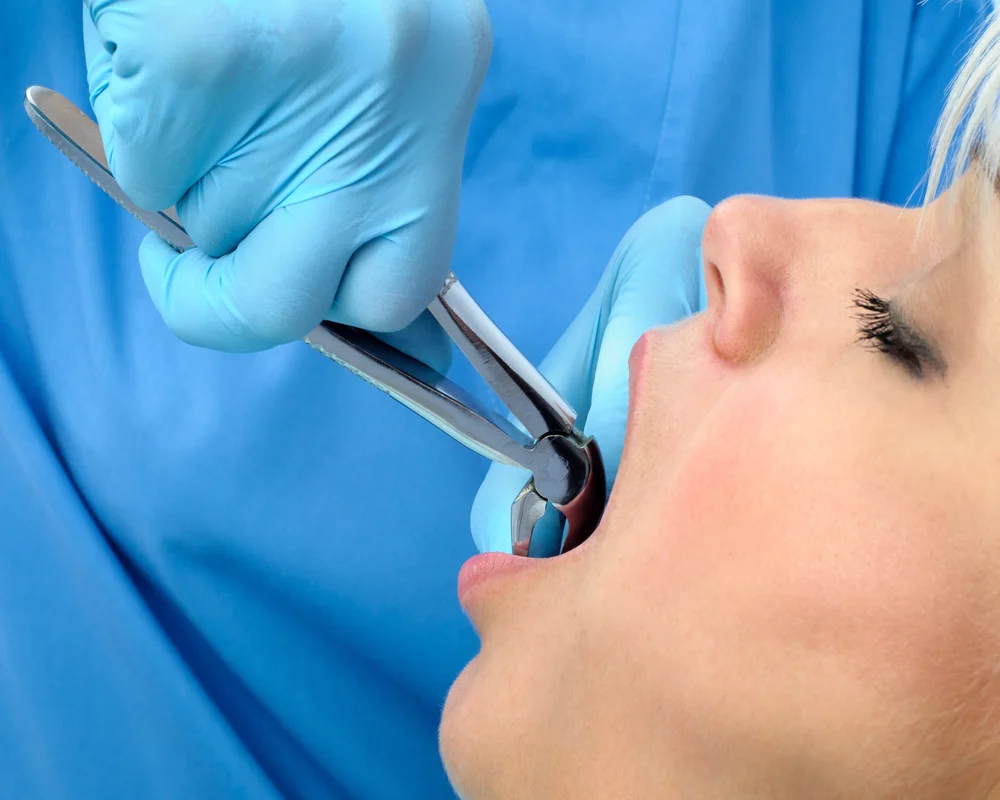
No dentist recommends removing a tooth without first looking for a way to save it. But there are situations where extraction is the correct call, and attempting to preserve a tooth that cannot realistically be saved leads to repeated treatment, ongoing infection, and unnecessary cost. MiNa Family Dentistry handles both simple and surgical extractions in-house, with Dr. Kadivar managing straightforward cases and Dr. Adibrad, our on-site dental surgeon with an MSc in periodontics, performing surgical procedures that would otherwise require a referral to an external specialist.
When Is Tooth Extraction the Right Choice?
The decision to extract is made after a thorough examination and review of diagnostic X-rays. Each of the following situations represents a clinical scenario where extraction is typically indicated.
Severe Decay That Cannot Be Restored
When a cavity has destroyed too much tooth structure to support a filling or crown, and root canal therapy has also been ruled out because the tooth is structurally compromised at the root level, extraction becomes the appropriate path forward.
Vertical Root Fracture
A vertical root fracture starts at the root and travels upward. These fractures are difficult to detect and are often discovered only when a persistent infection develops alongside the root despite previous treatment. There is no reliable way to repair a vertical root fracture — extraction is the standard of care.
Advanced Periodontal Bone Loss
Severe gum disease causes the bone surrounding tooth roots to resorb progressively. When bone support is so reduced that a tooth is mobile, cannot bear normal bite forces, or harbours an infection threatening adjacent teeth, extraction removes the source of infection and allows surrounding tissues to heal.
Failed Root Canal With Unresolvable Infection
Root canal therapy has a high success rate, but in some cases retreatment or apicoectomy are not feasible options. If infection persists and the tooth cannot be saved through further intervention, extraction eliminates the infection source.
Severe Abscess or Spreading Infection
When a dental abscess has caused significant swelling, spread to adjacent structures, or is not responding to antibiotics, extraction provides definitive drainage and source control, particularly when root canal therapy is not viable for that tooth.
Orthodontic Preparation
Some orthodontic treatment plans require the removal of one or more teeth to create space for proper alignment. Premolars are most commonly extracted for this purpose.
Simple vs. Surgical Extraction
Simple Extraction
A simple extraction is performed on a fully erupted tooth with intact roots that can be loosened and removed without requiring an incision. Dr. Kadivar performs simple extractions at MiNa Family Dentistry during your regular or emergency appointment.
Surgical Extraction
A surgical extraction is required when the tooth is partially or fully impacted, has roots that are curved or ankylosed to surrounding bone, or has broken off at the gumline so the roots must be retrieved separately. Surgical extraction involves an incision in the gum tissue and sometimes the removal of a small amount of bone to access the root. Dr. Adibrad performs surgical extractions at MiNa Family Dentistry — patients do not need to be referred to an external oral surgeon.
What Does a Tooth Extraction Feel Like?
Before the extraction begins, the area around the tooth is thoroughly numbed with local anaesthetic. Dr. Kadivar or Dr. Adibrad will confirm you are fully numb before proceeding. You will feel pressure and movement, but not pain. If you feel anything sharp, say so immediately so additional anaesthetic can be given.
For a simple extraction, the dentist uses an elevator instrument to loosen the periodontal ligament fibres holding the tooth in the socket, then forceps to remove the tooth with controlled rocking and rotation. The sensation is one of pressure. Most simple extractions take between 5 and 20 minutes.
For a surgical extraction, the tooth may be sectioned into segments to allow each piece to be removed without excessive force on surrounding bone. This is standard technique. Surgical extractions typically take 30 to 60 minutes depending on root anatomy. Soreness and mild throbbing for 24 to 72 hours afterward is normal and managed effectively with over-the-counter ibuprofen and acetaminophen.
Aftercare: Protecting the Clot and Preventing Dry Socket
The most important thing after an extraction is protecting the blood clot that forms in the empty socket. This clot is the foundation of healing. Losing it before the socket has closed results in dry socket — severe, radiating pain beginning two to four days after the extraction.
- Bite firmly on the gauze pad placed after extraction for 30 to 45 minutes without removing it to check
- Avoid rinsing, spitting forcefully, or using a straw for the first 24 hours — the suction can dislodge the clot
- Do not smoke for at least 72 hours — smoking is the single biggest risk factor for dry socket
- Eat soft foods for the first 24 to 48 hours: yogurt, mashed potatoes, scrambled eggs, smoothies without a straw
- After 24 hours, rinse gently with warm salt water after meals and before bed
- Keep your head elevated while sleeping for the first night to reduce swelling
- Apply a cold pack to your cheek for the first day, 15 minutes on and 15 minutes off
Signs of Dry Socket to Watch For
If you develop dry socket, call MiNa Family Dentistry promptly. Treatment involves placing a medicated dressing in the socket that provides near-immediate relief.
- Pain that intensifies rather than improves after day two or three
- A visible empty socket with no dark clot, only exposed bone
- Pain that radiates to the ear or jaw on the same side
- Bad taste or odour from the socket
Tooth Replacement Options After Extraction
Tooth extraction is rarely the end of the story. When a tooth is removed, the surrounding bone begins to resorb within weeks because it no longer receives stimulation from the tooth root. Adjacent teeth can drift into the space, altering your bite and making replacement more complex over time. Planning for replacement should begin at the extraction appointment.
Dental Implant
A dental implant is a titanium post placed surgically into the jawbone to replace the tooth root. It is the closest available substitute to a natural tooth in terms of function, feel, and bone preservation. After the implant integrates with the bone — typically three to six months — a crown is attached on top. Dr. Adibrad places implants at MiNa Family Dentistry. For some patients, an implant can be placed at the same appointment as the extraction, reducing overall treatment time.
Fixed Dental Bridge
A bridge is a fixed restoration that spans the gap left by the extracted tooth, anchored to the natural teeth on either side. Unlike an implant, a bridge does not preserve bone in the space below it, but it is a faster solution that does not require a surgical procedure.
Partial Denture
A removable partial denture replaces one or more missing teeth. It is the most affordable option but also the least stable during chewing. For patients who are not candidates for an implant or bridge, a partial denture maintains spacing between remaining teeth and restores basic chewing function.
Why Acting Fast on Replacement Matters
Bone resorption after tooth loss is most significant in the first 6 to 12 months. Early placement of an implant, or socket preservation — a bone grafting procedure placed at the time of extraction to slow bone loss — significantly improves the bone volume available for future implant placement. Delaying replacement by months or years may mean that bone grafting becomes a necessary first step before an implant can be placed.
Cost of Tooth Extraction in Thornhill
Simple extractions typically range from $200 to $400. Surgical extractions, depending on root anatomy and the need for bone removal or sectioning, range from $400 to $800. Most dental insurance plans cover a portion of extraction costs. MiNa Family Dentistry submits directly to major insurers and can provide a pre-authorization estimate when time permits.
Watch & Learn
Further Reading
ADA: Dental EmergenciesFrequently Asked Questions
Ready to get started?
MiNa Family Dentistry
7191 Yonge St Unit 205, Thornhill, ON L3T 0C4
(289) 597-7191
Mon–Thu 9:00 AM–6:00 PM | Fri 9:00 AM–3:00 PM