

Wisdom Teeth Removal Thornhill: In-House Surgical Care With No Referral Required
Specialist-level wisdom teeth removal in Thornhill performed in-house by Dr. Adibrad — call (289) 597-7191.
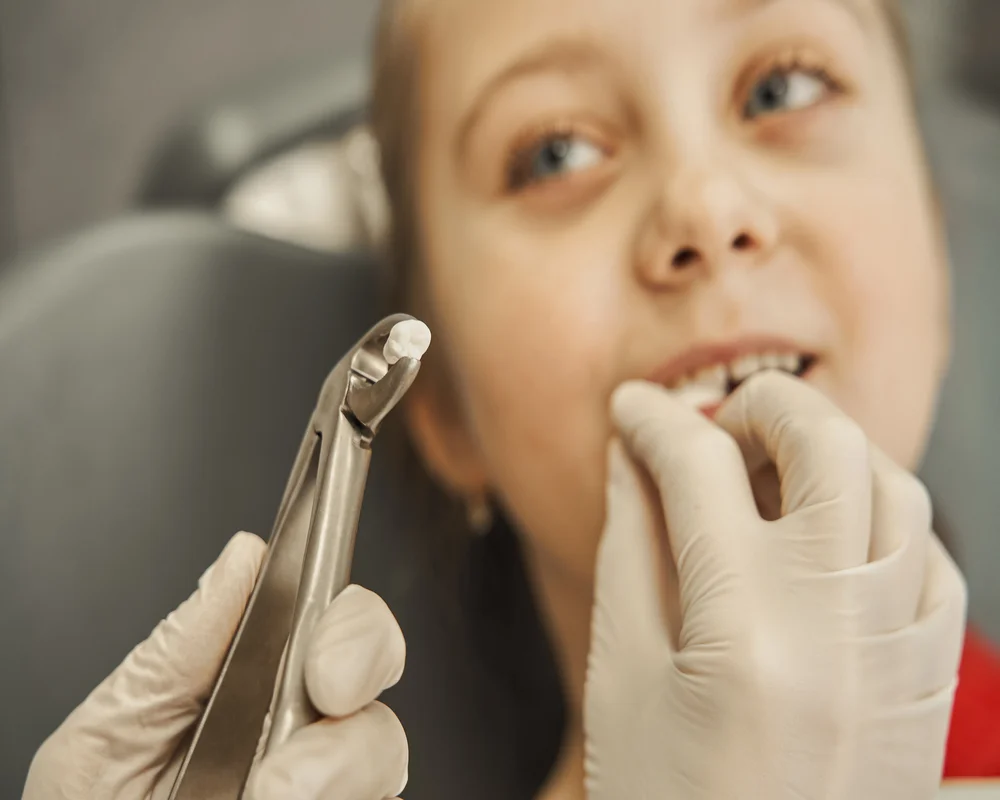
Wisdom teeth removal in Thornhill used to mean a referral to an external oral surgeon, a separate consultation, and weeks of waiting while pain or infection continued. At MiNa Family Dentistry, Dr. Mehdi Adibrad performs wisdom tooth removal, including fully impacted surgical cases, in-house. Dr. Adibrad holds an MSc in periodontics and specializes in oral surgery and dental implants, which means patients receive specialist-level care without leaving the practice where their dental records already live.
Why Wisdom Teeth Cause Problems
Wisdom teeth, technically called third molars, are the last teeth to develop. They typically begin to erupt between ages 17 and 25, long after the jaw has reached its adult dimensions. Most modern jaws do not have room for them.
When a wisdom tooth does not have sufficient space to erupt normally, it becomes impacted — either blocked by the adjacent tooth, angled incorrectly, or trapped partially or fully beneath the gumline. Impacted wisdom teeth do not simply stay in place harmlessly. Over time they create predictable complications, which is why wisdom teeth removal is one of the most common dental surgical procedures performed.
Types of Wisdom Tooth Impaction
Impaction is classified by the angle of the trapped tooth relative to the second molar and the depth at which it sits. Dr. Adibrad uses a panoramic X-ray to identify which type of impaction is present before planning the extraction approach.
| Impaction Type | Description | Surgical Complexity |
|---|---|---|
| Vertical | Upright position, partially blocked by second molar or bone | Low to moderate |
| Mesial | Angled forward toward the second molar — most common type | Moderate |
| Distal | Angled backward toward the jaw | Moderate to high |
| Horizontal | Lying on its side, pointing directly at adjacent molar root | High — almost always requires sectioning |
| Fully bony | Entirely beneath the bone | High — requires bone removal |
Signs You May Need Wisdom Teeth Removal
Jaw pain or pressure at the back of the mouth
Pain or a constant pressure sensation behind the last visible molar is a classic early sign of an erupting or impacted wisdom tooth. The pain may radiate to the ear, temple, or jaw joint.
Swelling and difficulty opening the mouth
When a wisdom tooth is partially erupted, bacteria accumulate under the gum flap that partially covers it, called an operculum. This leads to an infection called pericoronitis, causing swelling, pain, difficulty opening the mouth, and sometimes fever. Once a wisdom tooth has caused pericoronitis more than once, removal is the definitive solution.
A gum flap behind your last molar
Even without active infection, the tissue over a partially erupted wisdom tooth traps food and bacteria and is almost impossible to clean effectively. It is an ongoing risk for infection.
Cyst formation
Each wisdom tooth develops inside a small follicular sac. If the tooth remains impacted, this sac can enlarge into a dentigerous cyst, which destroys bone and can damage adjacent tooth roots. Cysts are typically discovered on a panoramic X-ray before they cause visible symptoms — one reason routine X-ray monitoring of unerupted wisdom teeth matters.
Assessment: Panoramic X-Ray and Root Mapping
Before any wisdom tooth surgery is planned, Dr. Adibrad reviews a panoramic X-ray — an image that captures all teeth, both jaws, and the surrounding bone. This essential diagnostic step shows the position, angle, and depth of each wisdom tooth; the number and curvature of the roots; proximity of lower wisdom tooth roots to the inferior alveolar nerve; whether a cyst has formed; and the bone density specific to your jaw.
For lower wisdom teeth that sit close to the inferior alveolar nerve, Dr. Adibrad assesses the risk carefully before surgery. In cases where root tips are in very close proximity to the nerve, a CBCT scan — a three-dimensional X-ray — may be recommended for a more precise view before surgery.
The Wisdom Teeth Removal Procedure
The area around the wisdom tooth is fully numbed with local anaesthetic before the procedure begins. You will feel pressure and movement, but no sharp pain. If any sensation causes discomfort, additional anaesthetic is given immediately.
For impacted teeth, Dr. Adibrad makes a small incision in the gum tissue and gently reflects it back to access the tooth and, when needed, the surrounding bone. For deeply impacted or fully bony wisdom teeth, a small amount of bone overlying the tooth is carefully removed to expose the crown — this is standard technique and does not create structural weakness in the jaw. Horizontally or deeply impacted teeth are often divided into two or three sections before removal to reduce the force needed and protect surrounding bone and tissue.
Once removed, the socket is irrigated, inspected for any remaining fragments, and the gum tissue is closed with sutures. A single erupted wisdom tooth may take 20 to 30 minutes. A fully impacted lower wisdom tooth takes 45 to 75 minutes. Removing all four wisdom teeth in a single session is possible when clinically appropriate, and many patients prefer to consolidate recovery into one period.
Recovery Timeline
Day of Surgery
Bleeding is controlled with gauze. Rest at home, keep your head elevated, and apply cold packs to your cheeks for 15 minutes on and 15 minutes off. Eat only soft foods. Take prescribed or recommended pain medication as directed.
Days 2 and 3
Swelling reaches its peak on days two and three — this is expected and does not indicate a problem. Continue cold packs on day two. From day three onward, gentle warm compresses can help reduce residual swelling. Pain should be at its peak or beginning to improve.
Days 4 Through 7
Swelling and pain decrease noticeably. Soft foods remain advisable. Gently rinse with warm salt water after meals. Most patients feel well enough to return to work or school by days four to five, though activity restriction should continue for five to seven days.
Week 2 and Beyond
The gum tissue closes over the socket and the surface is largely healed by the end of week two. Full bone healing takes three to four weeks for most patients, though cases with larger extractions or bone removal can take six to eight weeks.
Food Guide for Recovery
Recommended foods for the first week
- Yogurt and soft cheeses
- Mashed potatoes, sweet potatoes, butternut squash
- Scrambled eggs or soft-boiled eggs
- Oatmeal and soft-cooked porridge
- Soft-cooked pasta and rice
- Smoothies and milkshakes without a straw
- Applesauce, bananas, avocado
- Soft fish without bones
Foods to avoid
- Anything hard, crunchy, or sharp such as chips, crackers, nuts, or raw vegetables
- Sticky foods that can pull at sutures or lodge in sockets
- Spicy foods that irritate healing tissue
- Alcohol, which interferes with healing and interacts with medications
- Carbonated drinks, which can dissolve the clot
- Hot drinks for the first 24 hours
Dry Socket and Pain Management
Dry socket — loss of the protective blood clot before the socket has healed — occurs in approximately 2 to 5 percent of wisdom tooth extractions. It is more common in lower wisdom teeth, in smokers, and in patients who use a straw or rinse forcefully in the first 24 hours. Signs include pain that intensifies on days two through four rather than improving, visible exposed bone in the socket, and pain that radiates toward the ear or jaw. Dry socket is treated by placing a medicated dressing in the socket, with relief typically felt within hours.
Most wisdom teeth removal cases are managed effectively with ibuprofen and acetaminophen taken in alternating doses. Prescription pain medication is available for more complex surgical cases. Do not smoke for a minimum of 72 hours after surgery — nicotine constricts blood vessels and the mechanical suction of smoking are the two primary mechanisms by which dry socket develops.
Cost of Wisdom Teeth Removal in Thornhill
Costs depend on the number of teeth being removed, the type of impaction, and whether surgical bone removal is required. Most dental insurance plans include coverage for wisdom tooth extractions when they are medically indicated. MiNa Family Dentistry submits directly to major insurers. A pre-authorization estimate can be obtained before your surgery date so you know your out-of-pocket costs in advance.
| Procedure Type | Approximate Cost Per Tooth |
|---|---|
| Simple erupted extraction | $300 to $500 |
| Soft tissue impaction | $350 to $550 |
| Partial bony impaction | $400 to $700 |
| Full bony impaction | $450 to $800 |
Dr. Adibrad's Surgical Approach
Dr. Adibrad's background in periodontics and oral surgery provides a foundation that goes beyond general dental training. His MSc training involved advanced study of bone biology, surgical tissue management, and complex extraction technique. Patients who come to MiNa Family Dentistry for wisdom teeth removal are not being treated by a general dentist attempting a challenging surgical procedure — they are being treated by a specialist working in a familiar clinical environment, with their complete dental history on hand and follow-up continuity built in.
This also matters for patients who may eventually want dental implants to replace other teeth. The same expertise that guides a careful surgical extraction is applied to implant placement, and the two procedures are often planned together where relevant.
Watch & Learn
Further Reading
Mayo Clinic: Wisdom Tooth ExtractionFrequently Asked Questions
Ready to get started?
MiNa Family Dentistry
7191 Yonge St Unit 205, Thornhill, ON L3T 0C4
(289) 597-7191
Mon–Thu 9:00 AM–6:00 PM | Fri 9:00 AM–3:00 PM