

Invisalign vs Braces Thornhill: Which Option Is Right for Your Smile?
A clear, honest comparison of Invisalign and traditional braces — appearance, comfort, hygiene, cost, and which cases each option handles best.
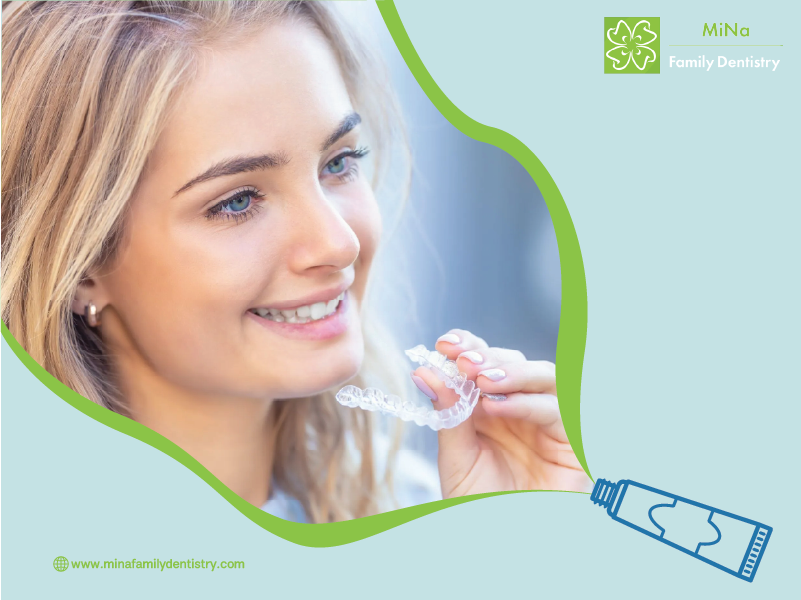
Choosing between Invisalign and traditional braces is one of the most common questions patients bring to MiNa Family Dentistry. Both are proven orthodontic treatments. Both will straighten your teeth. But they feel very different to live with day to day, and the right choice depends on your specific dental situation, your lifestyle, and your personal priorities.
The Core Difference: How Each Treatment Works
Traditional metal braces use brackets bonded to each tooth, connected by an archwire that your dentist or orthodontist periodically tightens to apply continuous pressure. The appliance is fixed; it works around the clock without any input from you.
Invisalign uses a series of custom-made, removable clear plastic aligners. Each aligner set is worn for approximately one to two weeks and is designed to move specific teeth by a small increment. You advance through the series under Dr. Kadivar's supervision, switching to a new set of aligners at each stage. Because they are removable, Invisalign aligners require a level of discipline that braces do not. Understanding this fundamental difference is the key to understanding almost every other comparison in this guide.
Head-to-Head Comparison: Invisalign vs Braces Thornhill
| Factor | Invisalign | Traditional Metal Braces |
|---|---|---|
| Appearance | Nearly invisible clear plastic | Visible metal brackets and wires |
| Removable | Yes - remove to eat, brush, and floss | No - fixed for the entire treatment |
| Compliance required | High - must be worn 20-22 hours per day | Low - works passively around the clock |
| Comfort | Smooth plastic, no brackets or wires | Brackets and wires can irritate cheeks |
| Hygiene difficulty | Normal brushing and flossing | Requires special floss threaders or a Waterpik |
| Diet restrictions | None - remove before eating | No sticky, hard, or chewy foods |
| Best case types | Mild to moderate crowding, spacing, and bite issues | Full range, including complex and severe cases |
| Check-up frequency | Every 6-8 weeks | Every 4-6 weeks |
| Cost in Ontario | $3,000 - $8,000+ | $4,000 - $7,000 |
| Insurance coverage | Same orthodontic benefit applies | Same orthodontic benefit applies |
| Retention after treatment | Lifelong retainer use required | Lifelong retainer use required |
Appearance: A Meaningful Difference for Many Patients
For most adults considering orthodontic treatment, appearance is the deciding factor. Invisalign aligners are made from a smooth, virtually invisible plastic. When worn correctly, most people are unaware you are in treatment at all. This matters enormously to professionals, patients who interact with the public, and anyone who simply does not want their dental treatment to be noticeable.
Metal braces are visible. Ceramic braces with tooth-coloured brackets reduce the visual impact but do not eliminate it, and they are generally more expensive than metal. Lingual braces attached to the back of the teeth are hidden but come with their own limitations in terms of treatment scope and tongue comfort.
Comfort: Day-to-Day Experience
Both options involve some discomfort, particularly in the first few days after starting a new aligner set or after a braces adjustment appointment. This is a sign that the teeth are moving, which is the point.
The nature of the discomfort is different. Invisalign pressure tends to feel like a gentle tightness concentrated on the teeth being moved in that particular aligner set. The plastic is smooth and does not have any sharp components. Traditional braces can cause irritation from the brackets and wire ends against the inside of the cheeks and lips, particularly in the early weeks and after each adjustment. Orthodontic wax can reduce the irritation, but brackets and wires remain a part of daily life for the full duration of treatment.
Hygiene: Keeping Your Teeth Clean During Treatment
Maintaining good oral hygiene during orthodontic treatment matters because teeth that are being moved are more vulnerable. Plaque that accumulates around brackets can lead to white spot lesions — areas of enamel damage that can remain even after braces are removed.
With Invisalign, you remove your aligners to eat and to brush and floss. Your hygiene routine does not change meaningfully. Patients who prioritize oral health often find this aspect of Invisalign genuinely easier to manage than the alternative. With traditional braces, brushing requires careful technique to clean above, below, and around each bracket. Flossing requires a floss threader or an orthodontic flosser to thread between the wire and the tooth surface. The process is manageable, but it requires more time and deliberate effort with every brushing session.
Diet: What You Can and Cannot Eat
With Invisalign, you remove your aligners before eating or drinking anything other than water. This means there are no food restrictions. You can eat popcorn, apples, bagels, chewing gum, and anything else you normally enjoy. After eating, you rinse your mouth, brush if convenient, and replace your aligners.
With traditional braces, a long list of foods becomes off-limits for the duration of treatment. Sticky foods such as caramel and gummy candies can dislodge brackets. Hard foods such as raw carrots, apples, hard bread crusts, and hard candies can bend wires or break brackets. Patients often find these restrictions more disruptive than they expected, especially over a treatment period measured in years rather than months.
Treatment Suitability: Which Cases Qualify for Invisalign?
This is the most important clinical consideration. Invisalign technology has advanced considerably and now handles a wide range of cases effectively, but it is not the right tool for every situation.
Invisalign is typically well-suited for mild to moderate crowding and spacing, mild to moderate overbite, underbite, or crossbite, cases where appearance and removability are priorities, patients with strong compliance habits, and cases involving relapse after previous orthodontic treatment. Traditional braces are typically better suited for severe crowding, rotation, or spacing; significant skeletal discrepancies; patients who need tooth movements that Invisalign mechanics do not handle as predictably; younger children whose jaw development makes compliance requirements impractical; and patients who do not feel confident about wearing aligners for the required daily hours.
Dr. Kadivar will give you an honest assessment of whether your case is well-suited to Invisalign at your consultation. Some patients who arrive expecting to need braces are excellent Invisalign candidates. Others with more complex needs are steered toward the treatment that will actually deliver their best result.
Compliance: The Variable That Changes Everything
Braces work passively. Once they are placed, the treatment progresses whether you think about it or not. You still need to follow hygiene instructions and attend your appointments, but the appliance itself does not rely on your active participation.
Invisalign requires consistent wear of 20 to 22 hours per day. Patients who remove their aligners for meals and social occasions but reliably put them back in achieve excellent results. Patients who routinely leave their aligners out for extended periods experience slower progress, may need additional aligner sets, and sometimes do not achieve the outcome they hoped for. Adults who choose Invisalign because they want a discreet option tend to be highly motivated and achieve strong outcomes.
Cost: Are They Really Comparable?
The short answer is yes, in most cases. Traditional braces in Ontario typically range from $4,000 to $7,000. Invisalign typically ranges from $3,000 to $8,000 or more, depending on case complexity. When you account for all the components of each treatment — including retainers, appointment frequency, and any accessory tools required for hygiene — the two options often land in a similar total cost range.
Dental insurance treats them identically. An orthodontic benefit in your employer dental plan covers Invisalign on exactly the same terms as braces. The benefit applies to the treatment, not the appliance.
Retention: What Happens After Treatment?
Both options require a commitment to wearing retainers after treatment is complete. Teeth have a natural tendency to shift back toward their original position, a process that can continue gradually over years. Wearing a retainer — typically every night long-term — is what holds your result.
This is the same with Invisalign and braces. Patients sometimes assume that Invisalign's removable nature means the commitment ends when the last aligner is removed. The retainer phase is permanent and applies equally to both treatment types. Dr. Kadivar will provide retainers and discuss the retention protocol at the end of your active treatment.
Who Should Choose Invisalign?
- Adults who want a discreet treatment option
- Professionals or public-facing individuals for whom visible braces would be a concern
- Patients with mild to moderate alignment issues
- Teens who are mature enough to manage consistent aligner wear
- Anyone who prioritizes normal eating habits and standard hygiene routines
- Patients who have relapsed after previous orthodontic treatment
Who Should Choose Traditional Braces?
- Patients with severe crowding, significant bite issues, or complex cases
- Younger children who are not yet ready to manage the compliance requirements of Invisalign
- Patients who are genuinely concerned about their ability to wear aligners consistently
- Cases where specific tooth movements are better served by fixed appliance mechanics
Watch & Learn
Further Reading
ADA: Braces & Clear AlignersRelated Services
Frequently Asked Questions
Ready to get started?
MiNa Family Dentistry
7191 Yonge St Unit 205, Thornhill, ON L3T 0C4
(289) 597-7191
Mon–Thu 9:00 AM–6:00 PM | Fri 9:00 AM–3:00 PM