

Gum Disease Prevention Thornhill — Protecting Your Gums and Your Overall Health
Seven out of ten Canadians will develop some form of gum disease in their lifetime — but with the right care, it is largely preventable.
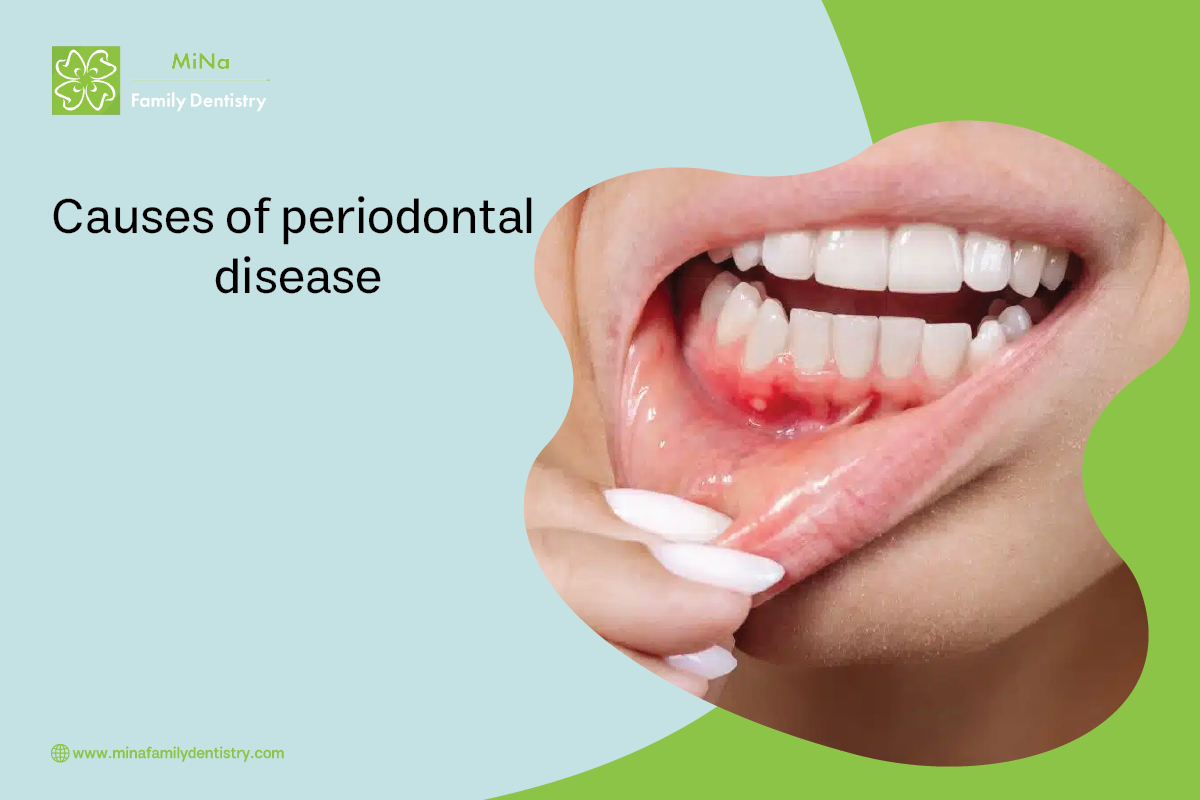
Seven out of ten Canadians will develop some form of gum disease in their lifetime, according to the Canadian Dental Association. That statistic is striking, but it is also reassuring in one important way: gum disease is largely preventable with the right combination of home care and professional support. MiNa Family Dentistry offers everything you need under one roof — from routine hygiene visits to in-house periodontic care with Dr. Mehdi Adibrad, a specialist with an MSc in periodontics and over 10 peer-reviewed publications.
This page explains how gum disease develops, who is at risk, what you can do at home, and how our team catches and addresses early signs before they progress into something more serious.
How Gum Disease Starts and Progresses
Gum disease does not appear suddenly. It develops gradually, usually quietly, over weeks and months of plaque accumulation at the gumline.
Stage One: Gingivitis
When plaque builds up along and just below the gumline, the bacteria it contains release toxins that irritate the surrounding tissue. The gum becomes inflamed — red, swollen, and more likely to bleed when you brush or floss. This stage is called gingivitis, and it is entirely reversible with a professional cleaning and improved home care.
Many people dismiss bleeding gums as normal or as a result of brushing too hard. Neither is accurate. Healthy gums do not bleed. Bleeding is an early warning sign that bacteria are winning the battle at your gumline, and it should prompt a dental visit, not a lighter brushing technique.
Stage Two: Periodontitis
If gingivitis is left untreated, the infection moves deeper. Bacteria colonize below the gumline, and the body's immune response to the chronic infection begins to destroy the bone and connective tissue that hold the teeth in place. This stage is called periodontitis.
Unlike gingivitis, the bone loss of periodontitis is not reversible. Pockets deepen around the teeth, roots become exposed, and — in advanced cases — teeth loosen and may need to be extracted. Periodontitis is the leading cause of tooth loss in adults worldwide. The challenge is that periodontitis is often painless until it is advanced. Regular gum assessments at dental checkups are the only reliable way to detect it early.
Who Is at Higher Risk for Gum Disease?
Anyone can develop gum disease, but several factors significantly increase the risk. If several of these apply to you, consistent professional gum care is especially important.
| Risk Factor | How It Affects Gum Health |
|---|---|
| Poor oral hygiene | Plaque accumulates unchecked at the gumline |
| Smoking or tobacco use | Reduces blood flow to gums; masks inflammation; impairs healing |
| Diabetes (especially poorly controlled) | Elevated blood sugar feeds oral bacteria; impairs immune response |
| Family history / genetics | Some people are genetically predisposed to aggressive gum disease |
| Dry mouth (xerostomia) | Saliva neutralizes acid and clears bacteria; without it, risk rises |
| Pregnancy | Hormonal changes increase gum sensitivity and inflammatory response |
| Certain medications | Including antidepressants, antihistamines, and blood pressure medications |
| Stress | Chronic stress suppresses immune function and increases inflammatory response |
| Age | Risk increases with age; adults over 65 have the highest rates of periodontitis |
| Crooked or crowded teeth | Create hard-to-clean areas where plaque accumulates |
Prevention at Home: The Foundation of Gum Health
The most important thing you can do to prevent gum disease is to disrupt plaque at the gumline every single day. Plaque that is consistently removed stays soft and harmless. Plaque that is left undisturbed for more than 24 to 72 hours begins to harden into tartar (calculus), which can only be removed professionally.
Brushing Technique
Most people brush their teeth but miss the gumline, which is exactly where gum disease begins. Use a soft-bristled toothbrush held at a 45-degree angle to the gumline, so the bristles contact both the tooth surface and the edge of the gum. Use short, gentle, circular or back-and-forth strokes. Brush for a full two minutes, twice a day.
An electric toothbrush with a pressure sensor is an excellent investment for anyone who has been told they brush too hard or who has a history of gum issues. The oscillating action is highly effective at disrupting plaque at and just below the gumline.
Flossing
Flossing is not optional for gum health. The spaces between teeth are where gum disease most commonly begins, and they are entirely unreachable by a toothbrush. Floss once daily, ideally before bed, using a clean section of floss for each tooth. Curve the floss into a C-shape against the side of the tooth and gently slide it under the gumline before moving up.
If traditional flossing is difficult due to dexterity limitations, braces, or bridgework, a water flosser (oral irrigator) is an excellent alternative. It is highly effective at flushing bacteria from the spaces between teeth and beneath the gumline.
Mouthwash
An antibacterial mouthwash can be a useful supplemental tool, particularly for patients with active gingivitis. It does not replace flossing, but it can reduce the bacterial load in areas that are missed. Chlorhexidine rinses are the most effective clinically but are typically used for short-term treatment, not daily maintenance, due to staining potential. Ask Dr. Kadivar which mouthwash is appropriate for your situation.
Professional Prevention: What We Do at MiNa Family Dentistry
No home care routine, no matter how thorough, can remove tartar once it has formed. That is why professional dental care is an irreplaceable part of gum disease prevention.
Regular Professional Cleanings
At every hygiene visit, our team removes tartar from above and below the gumline — including the bacteria-rich deposits that cause the chronic inflammation driving gum disease. For patients with healthy gums, this happens every six months. For patients with a history of gum disease or higher risk factors, we recommend visits every three to four months.
Periodontal Probing and Monitoring
At your dental exams, Dr. Kadivar performs a complete periodontal assessment, measuring the depth of the pockets around each tooth. Pocket depths of 1 to 3 millimetres are healthy. Measurements of 4 millimetres or more indicate that bacteria are living below the gumline, where regular cleaning cannot reach. Tracking these measurements over time reveals whether gum health is stable, improving, or deteriorating.
Scaling and Root Planing
When gum pockets are too deep to clean with routine hygiene, a procedure called scaling and root planing (sometimes called a deep cleaning) is performed. The hygienist or dentist cleans thoroughly below the gumline and smooths the root surfaces, making it harder for bacteria to reattach. This is done under local anaesthetic, and most patients find it comfortable. The gum tissue often responds well, tightening around the tooth and reducing pocket depths over the following weeks.
In-House Specialist Care With Dr. Adibrad
What makes MiNa Family Dentistry unique for patients with gum disease is the availability of Dr. Mehdi Adibrad in-house. Dr. Adibrad holds an MSc in periodontics, has published more than 10 peer-reviewed research papers, and specializes in periodontal treatment, dental implants, and advanced gum surgery.
If Dr. Kadivar identifies a patient who needs care beyond routine maintenance, she can refer directly to Dr. Adibrad within our practice. No separate specialist office, no referral delays. Your gum disease prevention care stays coordinated and continuous within the same team.
The Systemic Connection: Gum Disease Is Not Just a Mouth Problem
Research over the past two decades has established strong associations between periodontal disease and several serious systemic health conditions. While the causal relationships are still being studied, the associations are consistent enough that many physicians and cardiologists now ask their patients about their dental health.
Bacteria from infected gum tissue can enter the bloodstream and may contribute to arterial inflammation. Studies have found higher rates of heart disease and stroke in patients with untreated periodontitis. The relationship between diabetes and gum disease is bidirectional: poorly controlled blood sugar worsens gum disease, and chronic gum infection makes blood sugar harder to control. Managing gum disease often improves glycemic control. Pregnant women with untreated periodontal disease have a higher risk of preterm birth and low birth weight. And oral bacteria aspirated into the lungs can worsen pneumonia and chronic obstructive pulmonary disease in susceptible individuals.
Gum disease prevention is, in this sense, a whole-body health investment.
Gum Disease, Pregnancy, and the Hormonal Factor
Pregnancy is one of the most important times to maintain consistent dental care. Rising progesterone levels during pregnancy increase the sensitivity of gum tissue to plaque, causing an exaggerated inflammatory response even when oral hygiene is good. This is called pregnancy gingivitis, and it affects the majority of pregnant women to some degree.
Left unmanaged, pregnancy gingivitis can progress to periodontitis and may contribute to adverse pregnancy outcomes. Professional cleanings are safe throughout pregnancy, and we encourage pregnant patients to maintain their regular six-month schedule or to increase frequency if gingivitis develops.
Gum Disease, Age, and Long-Term Maintenance
The risk of periodontitis increases with age. Older adults are also more likely to be on medications that cause dry mouth, to have a longer history of accumulated tartar, and to have systemic conditions that compound periodontal risk. For adults over 50, consistent maintenance visits are especially important.
Patients who have been treated for periodontitis in the past should remain on a maintenance schedule, typically every three to four months, for life. Even after successful treatment, pockets that were once deeper than healthy can re-colonize with bacteria if professional cleaning intervals lengthen.
The Canadian Dental Care Plan and Gum Disease Prevention
The CDCP covers several services relevant to gum disease prevention and treatment for eligible Canadians, including scaling (cleaning), periodontal assessments, and — in some cases — scaling and root planing. Eligibility is income-tested. Our administrative team will check your coverage when you call and explain exactly what is included for your situation.
Watch & Learn
Further Reading
AAP: Gum Disease InformationFrequently Asked Questions
Ready to get started?
MiNa Family Dentistry
7191 Yonge St Unit 205, Thornhill, ON L3T 0C4
(289) 597-7191
Mon–Thu 9:00 AM–6:00 PM | Fri 9:00 AM–3:00 PM