

Dental Exam Thornhill — Comprehensive Checkups and X-Rays at MiNa Family Dentistry
A systematic, thorough dental exam in Thornhill that catches problems early — before small issues become large, costly ones.
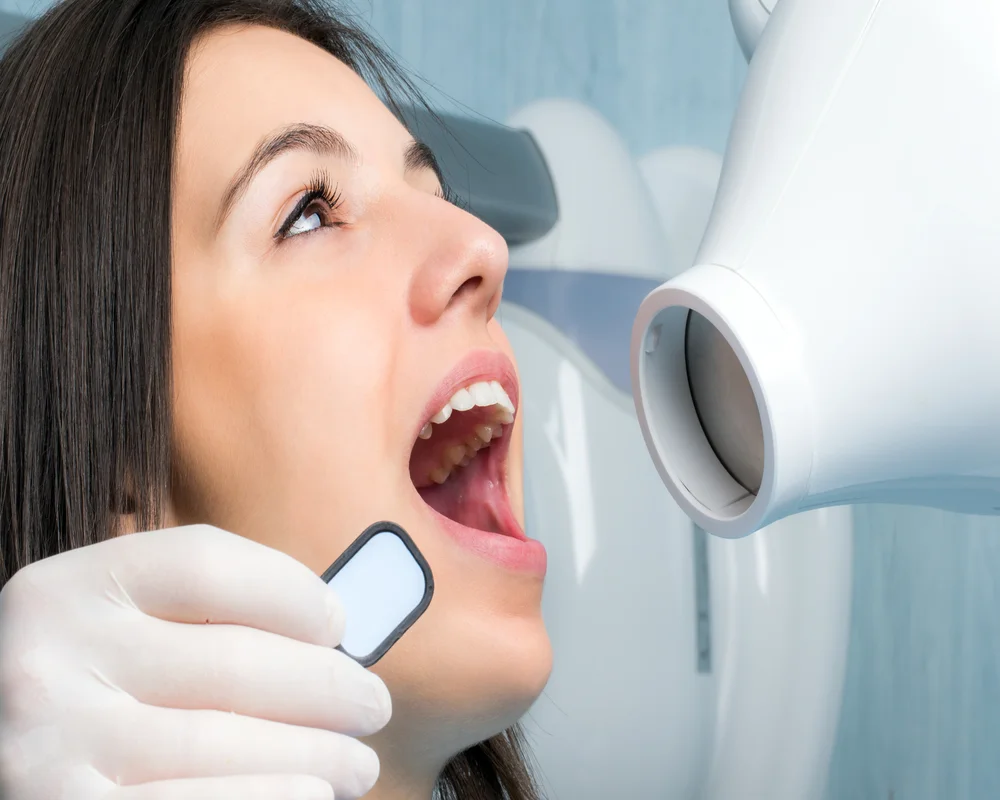
A dental exam is far more than a quick look in your mouth. It is a systematic assessment of your teeth, gums, bone, soft tissues, bite, and jaw joints — conducted by a dentist who knows what early warning signs look like and how to act on them before small problems become large ones. At MiNa Family Dentistry, a thorough dental exam is the foundation of everything we do. Dr. Neda Kadivar brings more than 20 years of experience and a careful, detailed approach to every examination, whether you are a returning patient or someone booking a first appointment after years away.
This page explains what a complete dental exam includes, which types of X-rays are used and why, how often you should schedule checkups, what your child's first exam looks like, and how to prepare for your first visit with our team.
What a Comprehensive Dental Exam Includes
A full dental exam covers several distinct components, each targeting a different aspect of your oral health. Here is what Dr. Kadivar assesses at every comprehensive examination.
Visual Examination of Every Tooth Surface
Dr. Kadivar systematically checks each tooth using a small mirror and explorer instrument. She examines every surface — front, back, biting edge, and the areas between teeth where cavities most commonly form. She also looks for signs of cracking, worn enamel, erosion from acid, and any restorations (fillings, crowns, or veneers) that may need attention.
Periodontal Probing and Gum Assessment
A small, calibrated probe is gently inserted between the tooth and the surrounding gum tissue at multiple points around each tooth. The measurement — called a pocket depth — tells us how much space exists between the tooth and gum. Healthy pockets measure 1 to 3 millimetres. Deeper pockets are a sign of active or past gum disease. Bleeding during probing is also documented, as it indicates gum inflammation.
Oral Cancer Screening
During every exam, Dr. Kadivar visually and manually examines the lips, cheeks, tongue, floor of the mouth, palate, throat, and neck lymph nodes. Oral cancer is highly treatable when caught early, but early lesions are often painless and invisible without a deliberate screening. This step takes only about two minutes and is included at every comprehensive exam.
Bite Assessment and TMJ Evaluation
Your bite affects how your teeth wear over time and how much strain your jaw joints absorb. Dr. Kadivar evaluates how your upper and lower teeth come together and listens and feels for any clicking, popping, or restriction in your temporomandibular joints (TMJ). Patients who grind or clench their teeth are often not aware of it until a dentist identifies the wear pattern.
Review of Dental X-Rays
X-rays reveal what cannot be seen with the naked eye: cavities forming between teeth, bone levels around roots, the position of unerupted teeth, root anatomy, and any abnormal structures in the jaw. Dr. Kadivar reviews all X-rays in detail and explains any findings to you in plain language.
Types of Dental X-Rays and When Each Is Used
Different X-ray types capture different information. At MiNa Family Dentistry, we use modern digital X-ray technology, which delivers a fraction of the radiation of older film-based systems.
| X-Ray Type | What It Shows | When It Is Used |
|---|---|---|
| Bitewing X-rays | Cavities between teeth; bone levels at the back teeth | Every 12–24 months for most patients |
| Periapical X-rays | Full root and surrounding bone for a specific tooth | When a toothache, abscess, or root issue is suspected |
| Panoramic (OPG) | Full-mouth overview including all teeth, sinuses, jaw | New patients; assessing wisdom teeth; evaluating jaw anatomy |
| Cone Beam CT (CBCT) | Three-dimensional view of bone, roots, and anatomy | Implant planning; complex extractions; TMJ assessment |
Bitewing X-Rays
Bitewings are the most common X-rays taken at a routine dental exam appointment. They show the crowns of your back teeth from the side, capturing the areas between teeth where cavities form that are completely invisible during a visual exam. They also show the height of bone supporting your teeth, which is an early indicator of gum disease.
Periapical X-Rays
When a specific tooth is symptomatic — painful, sensitive to biting, or visually concerning — a periapical X-ray captures the full length of the tooth from crown to root tip, along with the surrounding bone. This allows Dr. Kadivar to assess root length, identify abscesses, and evaluate the bone closely.
Panoramic X-Rays (OPG)
A panoramic radiograph captures all teeth, both jaws, the sinuses, and surrounding structures in a single image. It is particularly useful for new patients, for assessing the position and development of wisdom teeth, and for identifying any cysts, tumours, or bone abnormalities. The patient simply bites gently on a bite block while the machine rotates around the head — no film is placed inside the mouth.
Cone Beam CT (CBCT)
For patients planning dental implants or requiring complex extractions, a cone beam scan provides a three-dimensional view of the jaw, allowing Dr. Adibrad to precisely plan implant placement relative to nerves, sinuses, and bone quality. CBCT is not routine — it is ordered when specific anatomical information is needed.
How Much Radiation Do Dental X-Rays Involve?
Modern digital dental X-rays are exceptionally low dose. A full set of bitewing X-rays delivers approximately 0.005 millisieverts (mSv) of radiation — less than the radiation you receive during a cross-country flight, and far less than a single day of natural background radiation. The Canadian Dental Association and Health Canada support regular dental X-rays as a safe and essential diagnostic tool when used appropriately.
We follow the CDA's guidelines on X-ray frequency, which are based on each patient's individual risk profile rather than a one-size-fits-all schedule. Children who are cavity-prone may need bitewings more often than a low-risk adult. Patients who have not been seen in several years typically need a comprehensive set upon joining.
New Patient Exam vs. Recall Exam
Your first visit to MiNa Family Dentistry includes a full examination covering all the components described above, along with a complete set of X-rays appropriate for your age and history. We will take time to understand your dental history, any concerns or sensitivities you have, and your goals for your oral health. This appointment typically takes 60 to 90 minutes including hygiene.
Once you are an established patient, your routine checkup is shorter and focused on what has changed since your last visit. Dr. Kadivar checks for new cavities, changes in your gum health, any wear on existing restorations, and reviews updated X-rays as needed. A recall exam is typically 30 to 45 minutes when paired with your hygiene appointment.
How Often Should You Have a Dental Exam?
Most patients benefit from a comprehensive exam once a year and a recall exam every six months alongside their cleaning. However, your ideal frequency depends on your personal risk profile.
Patients who are cavity-prone, managing active gum disease, undergoing orthodontic treatment, or have complex dental histories may be advised to come in more often. Dr. Kadivar will give you a clear recommendation at your first visit and revisit it as your situation changes.
Your Child's First Dental Exam
The Canadian Dental Association recommends that children have their first dental visit within six months of the eruption of their first tooth, or by their first birthday — whichever comes first. This early timing surprises many parents, but it serves a very important purpose.
Baby teeth are susceptible to decay from the moment they emerge, and early decay (sometimes called early childhood caries or bottle rot) can progress quickly and affect speech, nutrition, and the spacing of permanent teeth. A first dental exam families book for their infant or toddler is mostly about education and relationship-building, not treatment.
The appointment is short, positive, and entirely designed to help your child feel safe and welcome at the dentist. We use the tell-show-do approach: we tell your child what will happen, show them the instrument, and then gently perform the action. Nothing is rushed.
- Gently examine the emerging teeth and gums
- Check for signs of early decay or unusual development
- Review diet and feeding habits with you (including bottle use at night, which is a leading cause of infant decay)
- Demonstrate how to clean your child's teeth at their current stage
- Answer all your questions at a pace that is comfortable for you
How to Prepare for Your First Visit at MiNa Family Dentistry
We welcome patients who have not seen a dentist in a long time. Dr. Kadivar's approach is non-judgmental and educational. Our goal is always to understand where you are starting from and to build a plan that works for you.
- Bring your current dental insurance card or plan information so our administrative team can set up direct billing
- If you have recent X-rays from a previous dentist, bring them or ask that office to forward them electronically
- Write down any questions or concerns before your appointment so you do not forget them
- If you take medications regularly, bring a list or your medication bottles
- Let us know about any relevant medical conditions when you call to book, particularly conditions that affect bleeding, immune function, or medication use
Insurance Coverage for Dental Exams and X-Rays in Ontario
Most employer group dental benefits plans in Ontario cover a comprehensive exam once a year or once every two years, and a recall exam once or twice per year depending on the plan. Bitewing X-rays are typically covered once every 12 to 24 months.
Children under 18 may qualify for coverage through OHIP+ for certain services, and the Canadian Dental Care Plan (CDCP) provides coverage for eligible adults and seniors for routine exams and X-rays as well. Our administrative team will check your eligibility and walk you through your coverage before your appointment.
Watch & Learn
Further Reading
Canadian Dental Association: Your Oral HealthFrequently Asked Questions
Ready to get started?
MiNa Family Dentistry
7191 Yonge St Unit 205, Thornhill, ON L3T 0C4
(289) 597-7191
Mon–Thu 9:00 AM–6:00 PM | Fri 9:00 AM–3:00 PM