

Fluoride Treatment Thornhill — Protecting Teeth With Fluoride and Dental Sealants
Two of the most powerful tools in preventive dentistry — professional fluoride and dental sealants — available for children and adults at MiNa Family Dentistry in Thornhill.
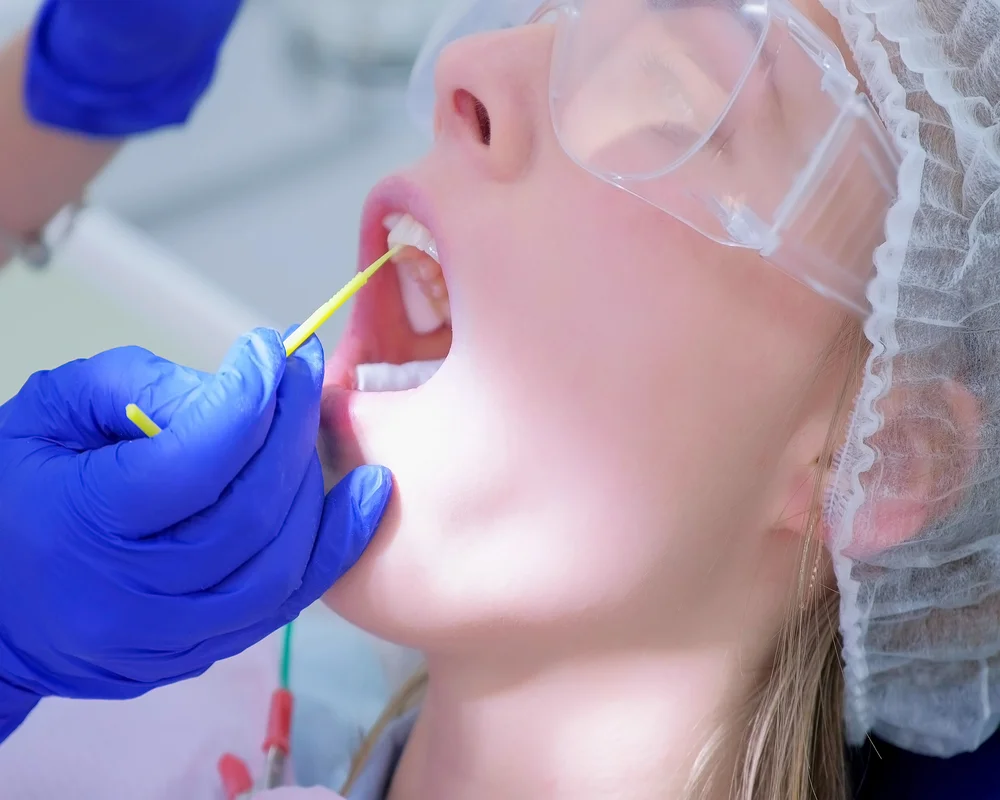
The most effective approach to dental care is prevention. When you protect a tooth before a cavity forms, you avoid the discomfort, expense, and irreversible enamel loss that comes with drilling and filling. Two of the most powerful tools in preventive dentistry are professional fluoride treatments and dental sealants — and at MiNa Family Dentistry, we offer both as part of our routine care for children and adults in Thornhill.
Part One: Professional Fluoride Treatments
What Does Fluoride Actually Do?
Fluoride is a naturally occurring mineral that works in two important ways. First, it remineralizes enamel that has been softened by acid attack — reversing early decay before it becomes a cavity. Second, it makes the crystalline structure of enamel harder and more resistant to future acid attacks. Bacteria in the mouth metabolize sugar and produce acid, which strips minerals from enamel in a process called demineralization. Fluoride accelerates the reverse process, drawing calcium and phosphate back into the enamel surface.
Professional fluoride is not the same as the fluoride in your toothpaste. In-office fluoride varnish contains a much higher concentration — typically 22,600 parts per million compared to the 1,000 to 1,450 parts per million in consumer toothpaste. This concentrated dose is applied directly to the teeth and is clinically proven to reduce cavity rates significantly, particularly in children.
Types of Professional Fluoride at MiNa Family Dentistry
Fluoride varnish is the most commonly used form in a dental office today. The hygienist or Dr. Kadivar paints a small amount of sticky, concentrated varnish onto every tooth surface using a brush or applicator. It takes about one minute and sets quickly. The varnish is left on for several hours to allow maximum absorption into the enamel. Patients are asked to avoid eating or drinking for 30 minutes after application and to use soft foods and avoid hard or crunchy items for the rest of the day.
Fluoride trays involve a custom or disposable tray filled with fluoride gel that is worn for a few minutes in the chair. This delivery method is effective and is sometimes used for patients with very high cavity risk or exposed root surfaces.
Professional Fluoride vs. Fluoride in Toothpaste
Home fluoride use is a daily habit that builds protection gradually over time. Professional fluoride treatment delivers a concentrated dose that penetrates more deeply and lasts for several months. The two approaches work together, not instead of each other. Think of professional fluoride as a boost that supplements your daily home care.
Who Benefits Most From Professional Fluoride Treatments?
Fluoride is not just for children. Many adults benefit significantly from in-office fluoride, particularly those in the following groups.
| Patient Group | Why Fluoride Is Especially Helpful |
|---|---|
| Children and teenagers | Developing enamel responds well to fluoride; high cavity risk during growth years |
| Adults with a history of frequent cavities | Enamel may be structurally more vulnerable; fluoride reduces recurrence |
| Patients with dry mouth (xerostomia) | Saliva is the mouth's natural defense; without it, decay risk rises sharply |
| Patients with exposed root surfaces | Root cementum is softer than enamel and highly susceptible to decay |
| Orthodontic patients with braces | Brackets create areas where plaque traps easily; fluoride protects around them |
| Patients with gum recession | Exposed roots require the same protection as enamel, often more |
| Patients undergoing chemotherapy or radiation | These treatments reduce saliva and compromise enamel; fluoride is a critical protective measure |
Water Fluoridation in Ontario
Many municipal water supplies in Ontario contain fluoride at the level recommended by Health Canada (0.7 mg/L). Residents of the Thornhill area served by York Region Water Services receive fluoridated water, which provides a continuous low-level source of fluoride that supports the remineralization cycle throughout the day. This is safe, effective, and recommended by Health Canada and the CDA as a public health measure.
Patients who use well water or bottled water exclusively may not receive this background fluoride benefit, making professional treatments and fluoride toothpaste even more important for their families.
Addressing Common Questions About Fluoride Safety
Some patients express concern about fluoride safety. The evidence on this is clear and consistent across decades of research. Fluoride varnish applied during a dental visit is safe at the concentrations and volumes used professionally. The small amount applied to tooth surfaces is minimal, and the risk of any adverse effect is negligible compared to the well-documented benefit of cavity prevention.
Health Canada and the Royal College of Dental Surgeons of Ontario support fluoride use in dentistry as an evidence-based, safe public health intervention. For patients who have questions, Dr. Kadivar is always happy to discuss the evidence in detail at your appointment.
Part Two: Dental Sealants
What Are Dental Sealants?
Dental sealants are thin plastic coatings applied to the biting surfaces of the back teeth — specifically the premolars and molars, whose deep grooves and pits are the most common sites for cavity formation. These grooves can be so narrow that a single toothbrush bristle cannot clean all the way to the bottom. Over time, bacteria and food debris accumulate in these pits and cause decay that is entirely preventable with a sealant.
A sealant fills in these grooves, creating a smooth, easy-to-clean surface that dramatically reduces the chance of a cavity forming in that location.
Who Benefits From Dental Sealants?
Sealants are most commonly placed in children and teenagers as their permanent molars erupt. The first permanent molars typically come in around age 6, and the second permanent molars around age 12. Sealing these teeth shortly after they erupt — before any decay begins — is one of the most cost-effective investments in a child's dental health.
However, sealants are not exclusively for children. Adults with deep grooves in their back teeth who have never had a cavity in those areas can also benefit. If the grooves are deep, the risk is real regardless of age.
The Sealant Application Process
Applying dental sealants is completely painless and requires no drilling. The tooth surface is cleaned and dried; an acidic conditioning gel is applied to the biting surface for a few seconds, then rinsed off to roughen the surface microscopically so the sealant bonds effectively; the tooth is dried again; a thin liquid sealant material is painted into the grooves; and a blue curing light hardens the sealant in about 20 seconds. Dr. Kadivar then checks the bite to ensure nothing feels high.
The entire process takes about five minutes per tooth and is comfortable for even young or nervous patients. No needles, no drilling, no discomfort.
How Long Do Dental Sealants Last?
Sealants typically last 5 to 10 years with normal function. They are checked at every hygiene appointment to ensure they remain fully intact. If a sealant chips or wears down in one area, it can be repaired or reapplied. A sealant that is partially broken is still providing protection where it remains intact.
Even after a sealant wears away completely, studies have shown that the teeth that were sealed have a lower cavity rate than comparable teeth that were never sealed, suggesting the early years of protection reduce the cumulative bacterial load in those grooves.
Dental Sealants and Insurance Coverage in Ontario
For children under 18, dental sealants may be covered through the Canadian Dental Care Plan (CDCP), OHIP+, or employer group dental plans, depending on the plan details and the child's age. Coverage is more consistent for sealants on permanent first and second molars.
Our administrative team will check your child's coverage when you call to book. If sealants are not fully covered, they remain one of the most affordable preventive procedures available — often less expensive than a single filling.
Fluoride and Sealants Together: A Complete Prevention Strategy
Fluoride and sealants work on different mechanisms and protect different surfaces. Fluoride strengthens the enamel mineral structure across all surfaces of every tooth. Sealants physically block bacteria from reaching the deep grooves of back teeth where fluoride alone may not be sufficient to compensate for the structural vulnerability.
Used together, they give children and high-risk adults the most comprehensive protection available against cavities. At MiNa Family Dentistry, we include a fluoride assessment at every hygiene visit for children and adults who are good candidates, and we proactively recommend sealants for children as their permanent molars come in.
Watch & Learn
Further Reading
ADA: Dental SealantsFrequently Asked Questions
Ready to get started?
MiNa Family Dentistry
7191 Yonge St Unit 205, Thornhill, ON L3T 0C4
(289) 597-7191
Mon–Thu 9:00 AM–6:00 PM | Fri 9:00 AM–3:00 PM