

Gum Disease Treatment in Thornhill: From Gingivitis to Advanced Periodontitis
All stages of gum disease treated in one place — no referral, no wait.
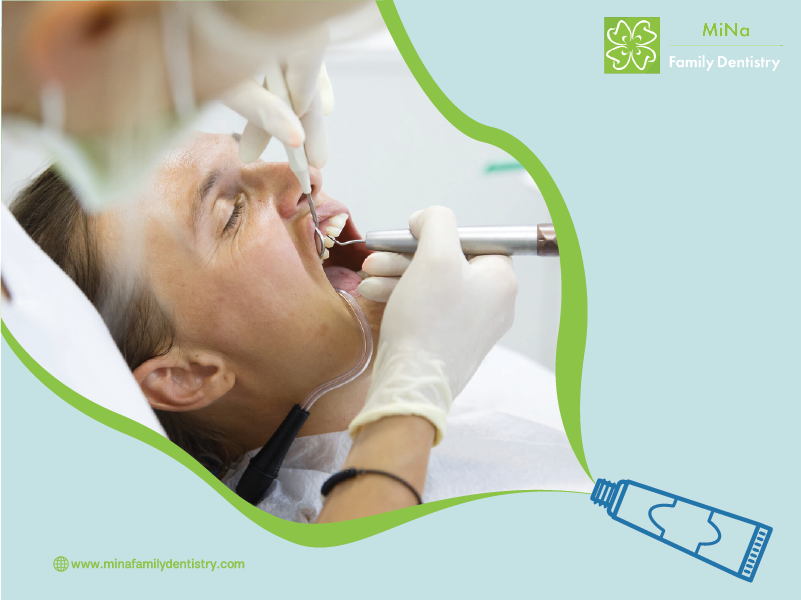
Gum disease is the most common chronic infection in adults, and the vast majority of cases are either undiagnosed or undertreated. Whether you are noticing bleeding gums for the first time or have been told you have significant bone loss, gum disease treatment in Thornhill is available at every stage — and the earlier you begin, the simpler and less invasive the treatment will be.
At MiNa Family Dentistry, located at 7191 Yonge St Unit 205 in Thornhill, patients benefit from having Dr. Mehdi Adibrad — a dental surgeon with an MSc in periodontics and over 10 peer-reviewed publications — available in-house for both non-surgical and surgical periodontal care. No referral is required.
Understanding Gum Disease: Stages and What They Mean
Periodontal (gum) disease progresses through distinct stages, and the stage at diagnosis determines which treatments are appropriate. The important thing to understand is that earlier stages respond to simpler, less invasive treatment, while advanced disease requires surgical intervention.
It is important to note that periodontal disease is largely painless until it reaches advanced stages. Most patients who present with moderate or severe periodontitis were unaware they had a problem. This is one reason why regular dental examinations that include periodontal charting (pocket depth measurements) are so important.
| Stage | Description | Key Signs | Treatment Level |
|---|---|---|---|
| Gingivitis | Inflammation of the gums without bone loss | Bleeding on brushing, red or puffy gums | Professional cleaning + home care improvement |
| Mild Periodontitis | Early bone loss; pockets 4–5 mm | Bleeding, pockets, early attachment loss | Scaling and root planing |
| Moderate Periodontitis | More significant bone loss; pockets 5–7 mm | Deeper pockets, gum recession, possible mobility | SRP; surgical evaluation |
| Severe Periodontitis | Advanced bone loss; pockets 7 mm or more; possible tooth mobility | Deep pockets, significant bone destruction, sensitivity | Periodontal surgery, regenerative treatment |
Gingivitis Treatment
Gingivitis is the only reversible stage of periodontal disease. Because no bone loss has yet occurred, the condition can be completely resolved with the right treatment and improved home care.
Treatment begins with a thorough professional cleaning (prophylaxis) that removes plaque and calculus above and just at the gumline, reducing the bacterial burden driving the inflammation. Dr. Kadivar and the dental hygiene team at MiNa Family Dentistry provide targeted instruction on brushing technique, flossing, and interproximal cleaning tools. For many patients, a simple adjustment in technique or the addition of a water flosser makes a meaningful difference. A follow-up visit 4–6 weeks later confirms whether the tissue has returned to health — treated early, the story ends here.
Non-Surgical Gum Disease Treatment: Scaling and Root Planing
For patients who have progressed beyond gingivitis to mild or moderate periodontitis, scaling and root planing (SRP) is the primary treatment. SRP is a deep cleaning procedure that removes calculus and bacterial biofilm from root surfaces below the gumline, and smooths the root surface to discourage bacterial recolonization.
Gum disease treatment in Thornhill at MiNa begins with SRP for eligible patients because it is the evidence-based foundation of non-surgical periodontal therapy. It is performed under local anaesthetic, typically over 2–4 appointments by quadrant, and followed by a re-evaluation 6–8 weeks later to measure how well the tissue has responded.
Surgical Gum Disease Treatment: What Dr. Adibrad Offers
The reason most Thornhill family dental clinics refer patients out for advanced gum disease treatment is simple: surgical periodontal procedures require specialized training and equipment that most general practices do not have. MiNa Family Dentistry is different. Dr. Adibrad holds an MSc in periodontics and has the training to perform all levels of periodontal surgery in-house. This means shorter wait times, better coordination between your surgical and restorative care, and no need to build a relationship with an outside specialist.
Surgery is indicated when SRP has been completed but pocket depth re-evaluation shows pockets that have not reduced to 4 mm or less, when bone loss visible on X-rays is significant enough that non-surgical access cannot adequately address the defects, when furcation involvement (disease between tooth roots) requires direct surgical access, or when anatomical factors make subgingival instrumentation without surgical access unreliable.
Osseous Surgery (Pocket Reduction Surgery)
Osseous surgery, also called flap surgery or pocket reduction surgery, involves making precise incisions in the gum tissue to fold it back and directly visualize the root surfaces and underlying bone. This allows Dr. Adibrad to remove calculus and infected tissue that SRP alone could not access, reshape irregular bone defects that harbour bacteria, and eliminate or reduce pockets so they can be maintained by the patient at home and at periodontal maintenance visits.
The gum tissue is then sutured back in a position that reduces pocket depth. Healing takes approximately 2–4 weeks before normal function resumes fully, though patients typically return to light activities within a day or two.
Bone Grafting with Guided Tissue Regeneration
When periodontitis has caused significant bone loss, the lost bone does not regenerate on its own. Regenerative periodontal surgery uses bone graft materials and barrier membranes to encourage the body to rebuild the lost supporting structures. Graft material (which may be synthetic, from a tissue bank, or in some cases from the patient) is placed in the bone defect to fill the space and provide a scaffold for new bone formation.
A barrier membrane is placed over the graft to prevent faster-growing gum tissue from occupying the space before bone-forming cells can populate it. The membrane is resorbable in most modern applications and does not require a second procedure to remove. The goal of regenerative therapy is not only to arrest disease progression, but to actually recover some of the supporting structure that was lost. Not every bone defect is amenable to regeneration — the shape of the defect and the patient's systemic health and home care are key factors.
Crown Lengthening
Crown lengthening is a surgical procedure that exposes more tooth structure above the gumline by reshaping the gum and often the underlying bone. It is relevant to gum disease treatment when a tooth has been damaged to the point where the margin of the damage extends below the gumline, making restorative treatment without surgery impossible. Crown lengthening is also performed for cosmetic reasons, such as correcting a gummy smile.
Why MiNa Is Different: Periodontal Surgery In-House
The standard pathway in the Greater Toronto Area for patients who need periodontal surgery is: family dentist identifies the problem, refers to a periodontist, patient waits weeks or months for an appointment, periodontist treats the patient, then refers back to the family dentist for restorations. At every handoff, information can be lost and the patient bears the burden of coordinating care.
At MiNa Family Dentistry, Dr. Adibrad and Dr. Neda Kadivar (general and cosmetic dentist with 20-plus years of experience) work in the same practice. When a patient needs SRP, osseous surgery, bone grafting, and then a crown on the affected tooth, all of that can happen at MiNa without transfers. The restorative and surgical phases are coordinated directly, which matters for outcomes — the timing of crown placement relative to periodontal healing, or the decision about whether a tooth should be extracted and replaced with an implant rather than surgically maintained, is a decision that benefits from both clinicians being in direct communication.
Gum Disease, Systemic Health, and Why Treatment Matters
The connection between periodontal disease and systemic health is one of the most important developments in dental medicine over the past two decades. Periodontitis is a chronic bacterial infection that produces a sustained inflammatory response that is not limited to the mouth.
Research published in major medical journals has linked untreated periodontitis to type 2 diabetes (treating periodontitis has been shown to improve HbA1c levels in diabetic patients), cardiovascular disease (periodontal bacteria have been found in arterial plaques), adverse pregnancy outcomes (active periodontal disease during pregnancy is associated with increased risk of preterm birth and low birth weight), and respiratory infections (aspiration of oral bacteria can contribute to lung infections, particularly in elderly or immunocompromised patients). Treating gum disease is, in a meaningful sense, a systemic health intervention.
Periodontal Maintenance: The Long Game
Periodontitis is a chronic condition. Even after successful treatment — whether surgical or non-surgical — it requires ongoing management. The bacteria that cause periodontal disease are always present in the oral environment. Without regular professional disruption of subgingival biofilm, they recolonize pockets and disease can recur.
Periodontal maintenance (supportive periodontal therapy) is scheduled every 3–4 months for most treated patients. These visits are not the same as a regular cleaning — they include subgingival instrumentation, full periodontal charting at each visit, and close monitoring for any signs of recurrence or progression. Patients sometimes feel, after successful treatment, that they no longer need frequent visits. The challenge is that periodontal disease is again largely symptom-free until it has progressed significantly — periodontal maintenance visits are what catch early recurrence before it requires retreatment.
Watch & Learn
Further Reading
AAP: Gum Disease InformationFrequently Asked Questions
Ready to get started?
MiNa Family Dentistry
7191 Yonge St Unit 205, Thornhill, ON L3T 0C4
(289) 597-7191
Mon–Thu 9:00 AM–6:00 PM | Fri 9:00 AM–3:00 PM