

Dental Implants Near North York
Losing a tooth changes more than your smile. It can make chewing harder, affect how you speak, and slowly shift the teeth around the gap. If you live in North York and have been putting off replacing a missing tooth, you are not alone, and you have good options worth understanding before you decide.
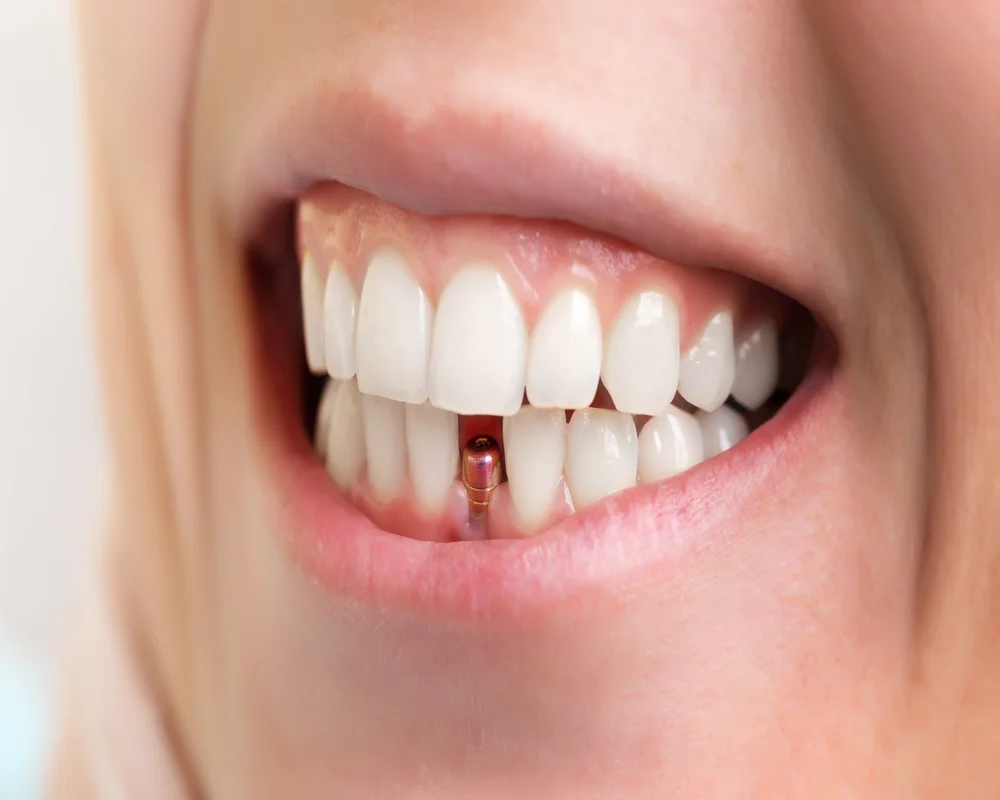
Dental implants are one of the longest-lasting ways to replace missing teeth. This page explains what implants involve, the choices available, and how dental implants in Thornhill at MiNa Family Dentistry may fit patients travelling from nearby North York. Every treatment plan is different, so the goal here is to help you ask better questions, not to replace a personal examination.
Where MiNa Family Dentistry Fits for North York Patients
First, an honest note: MiNa Family Dentistry does not have an office inside North York. Our clinic is in Thornhill, at 7191 Yonge St, Unit 205, just north of Steeles Avenue, which is the northern boundary of North York. For many patients in North York neighbourhoods along the Yonge corridor, such as Willowdale and Lansing, the clinic is a straightforward drive north on Yonge Street.
We mention this because some sites imply a local address they do not have. We would rather be clear: you would be visiting us in Thornhill. Many North York residents already choose a dentist just over the boundary for easier booking and parking, while staying close to home.
If you are comparing general options first, you can also read about our dental care for North York families, which covers everyday services beyond implants.
What a Dental Implant Actually Is
A dental implant is a small, screw-shaped post, usually made of titanium, that is placed into the jawbone to act like the root of a missing tooth. It is not the visible tooth on its own. A complete implant has three parts that work together.
Understanding these parts helps the rest of this page make sense:
- The implant (the post placed in the bone, which supports everything above it).
- The abutment (a small connector that attaches to the implant once healing is complete).
- The restoration (the visible crown, bridge, or denture that is fitted onto the abutment).
Implant Options North York Patients Ask About
There is no single "implant" treatment. The right approach depends on how many teeth are missing, the condition of your jawbone, and your goals. During a consultation, your dentist will explain which options may suit your situation. Common paths include:
- Replacing one tooth with a single-tooth dental implant, which does not rely on grinding down the neighbouring teeth.
- Replacing several teeth, sometimes using individual implants or an implant-supported bridge.
- Stabilising a loose denture with implant-supported dentures that snap securely into place.
- Restoring a full arch of teeth with full-arch implant treatment when most or all teeth are missing.
Who May Be a Candidate
Many adults who are missing one or more teeth can be considered for implants, but candidacy is decided after an examination, not from a web page. Your dentist will look at your gum health, the amount and quality of jawbone available, and your overall medical history.
Some patients need a preliminary step before implant placement. For example, if a tooth has been missing for a long time, the bone in that area may have shrunk. In that case, bone grafting before implant placement may be discussed to build a stronger foundation. Habits such as smoking and conditions such as uncontrolled diabetes can affect healing, and your dentist will talk through how these may influence your plan.
What to Expect: Consultation and Assessment
The process usually begins with a consultation. This is a conversation and an assessment, not a commitment to surgery. Your dentist will examine your mouth, review your history, and take images such as X-rays or a 3D scan to see the bone and nearby structures.
From there, you will receive an explanation of your options and a written estimate before any treatment begins. If implants are appropriate, the placement itself is a planned procedure, followed by a healing period. Your dentist will determine the timeline that fits your case, since healing varies from person to person.
Healing and Osseointegration
After an implant is placed, the bone gradually grows around and bonds to it. This process is called osseointegration, and it is what gives an implant its stability. It takes time, often several months, and it cannot be rushed.
Once your dentist confirms the implant is well integrated, the abutment and final restoration are added. Following the full sequence carefully is part of why implants can last many years, though individual results and healing times vary.
Costs and Insurance Considerations
The cost of implant treatment depends on several factors: how many teeth are being replaced, whether any preliminary treatment such as extraction or bone grafting is needed, the type of restoration, and the imaging involved. Because of this, a meaningful number can only come from an examination.
For a clear breakdown of what drives the price and what is usually included, see our guide to the factors behind dental implant cost. Dental insurance coverage varies widely, and some plans exclude implants or apply annual maximums. Bring your plan details to your consultation, and confirm any public-program coverage with your provider rather than assuming, as these details change over time.
Recovery and Follow-Up Care
Most patients manage the days after placement with the guidance their dentist provides. General expectations often include eating softer foods for a while, keeping the area clean, and avoiding smoking, which can interfere with healing.
You should contact the clinic if you notice ongoing swelling, bleeding that does not settle, or a loose feeling around a healed implant. These are not reasons to panic, but they are worth a professional check. This page offers general information only and is not individual medical advice; your dentist will give instructions specific to you.
Your Dentists at MiNa Family Dentistry
Implant care at MiNa is led by Dr. Mehdi Adibrad, a dental surgeon whose practice is limited to periodontal surgery, dental implants, and cosmetic surgery. He handles the surgical side of implant treatment, including cases that involve the gums and supporting bone.
General, restorative, and family dental care is provided by Dr. Neda Kadivar, a general and family dentist. Working together, the team can coordinate the full journey, from the first assessment through to the final restoration and ongoing maintenance, in one Thornhill location.
Booking a Consultation from North York
If you are weighing up implants, the most useful next step is a consultation where your questions can be answered against your actual situation. You can request an implant consultation online, or call the clinic directly at (289) 597-7191 to find a time that works.
MiNa Family Dentistry is at 7191 Yonge St, Unit 205, Thornhill, ON L3T 0C4, a short drive north on Yonge Street for many North York patients. You can also review each dentist's registration through the Royal College of Dental Surgeons of Ontario, the body that regulates dentists in the province.
Watch & Learn
Further Reading
RCDSO: verify a dentist's registration in OntarioFrequently Asked Questions
Ready to get started?
MiNa Family Dentistry
7191 Yonge St Unit 205, Thornhill, ON L3T 0C4
(289) 597-7191
Mon–Thu 9:00 AM–6:00 PM | Fri 9:00 AM–3:00 PM