

Do Dental Implants Get Cavities? What You Need to Know
It is a common and sensible question: if you replace a tooth with a dental implant, can that new tooth still get a cavity? The short answer is no — an implant cannot decay the way a natural tooth does. But that does not mean an implant needs no care.
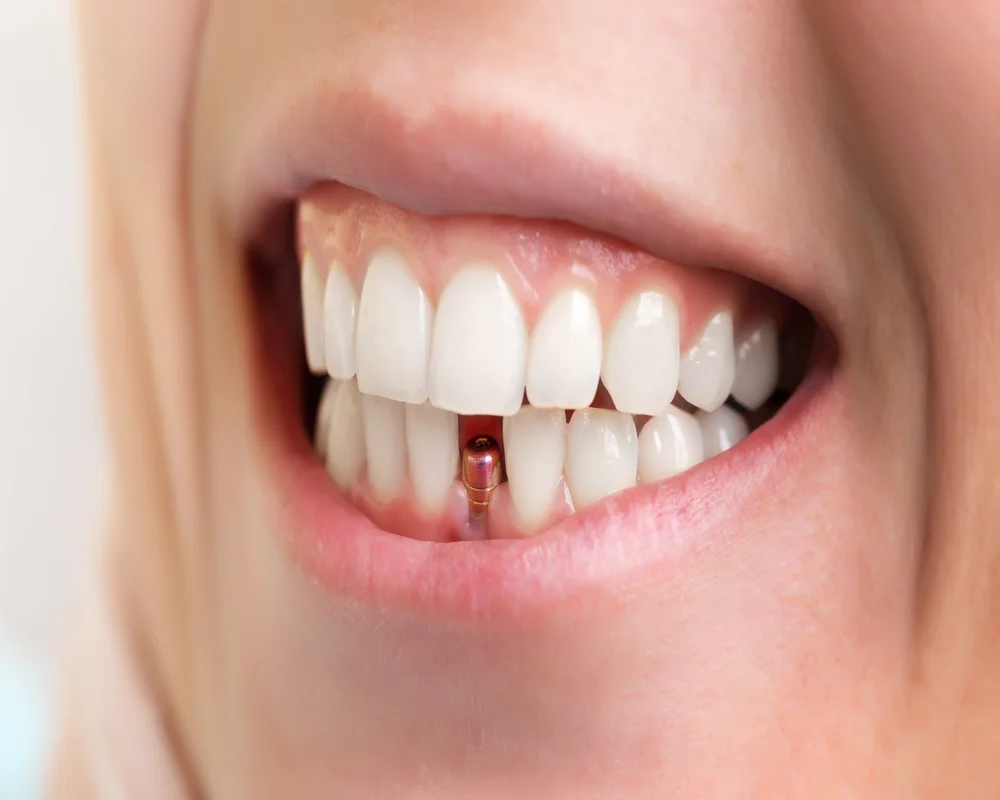
This guide explains why implants do not get cavities, what can still affect them, and how to keep yours healthy. It is general information, and your dentist or hygienist will tailor advice to your restoration. For the wider picture, see our overview of dental implants in Thornhill.
Why Implants Cannot Get Cavities
A cavity forms when acids produced by bacteria dissolve the mineral structure of a natural tooth. An implant and its crown are made from materials such as titanium and ceramic or porcelain, which those acids cannot break down in the same way.
So the part you can see, and the post beneath it, will not develop decay. For people who have struggled with recurring cavities in a particular tooth, this can be a genuine relief. But the story does not end with the implant itself.
What Can Still Affect an Implant
While the implant cannot decay, the gum and bone that hold it in place are living tissue and can still be affected by plaque. If plaque builds up around the implant, the surrounding gum can become inflamed, and over time this can affect the support around the implant.
In other words, the risk shifts from decay to gum health. This is why cleaning around an implant remains just as important as cleaning a natural tooth, even though the implant will never get a cavity.
The Real Concern: Gum Health Around Implants
The conditions that affect the tissues around implants are broadly similar to gum disease around natural teeth. Early inflammation of the gum can, if left unchecked, progress to affect the bone that supports the implant.
The reassuring part is that these problems are largely preventable with good daily cleaning and regular check-ups. Catching inflammation early makes it much easier to manage, which is one reason routine visits matter. Our guide on how to clean dental implants covers the routine in detail.
It also helps to know that mild gum inflammation, caught early, can often be reversed with better cleaning and a professional clean. It is when it is ignored for a long time that it becomes harder to treat, so paying attention to the area is genuinely worthwhile rather than something to worry about.
How This Compares to a Natural Tooth
It can be helpful to think of an implant as swapping one set of risks for another, smaller one. A natural tooth carries the risk of decay and gum disease; an implant carries only the gum-and-bone risk, because it cannot decay. In that sense, the implant simplifies what you need to watch for.
That does not make an implant maintenance-free, but it does mean your attention can focus on one thing: keeping the surrounding tissue healthy. For many people who have lost a tooth to repeated decay, removing the decay risk entirely is a real and welcome change.
Do Neighbouring Natural Teeth Still Need Care?
Absolutely. Your remaining natural teeth can still get cavities, so your overall oral hygiene routine is as important as ever. It can be a mistake to think that because one tooth is now an implant, that area needs less attention.
In fact, keeping the whole mouth healthy supports your implant too, since gum disease does not respect the boundary between natural teeth and implants. A consistent routine protects everything at once.
How to Keep Your Implant Healthy
Caring for an implant is not complicated. A steady daily routine, much like caring for natural teeth, keeps the surrounding tissues healthy:
- Brush twice a day with a soft brush, including gently around the implant's gumline.
- Clean between the teeth daily with floss designed for implants or an interdental brush.
- Use any rinse your dentist recommends.
- Keep up with regular professional cleanings and check-ups.
- Mention any redness, bleeding, or a loose feeling to your dentist promptly.
Signs Worth a Professional Check
Because the risk with implants is about the gum and bone rather than decay, the warning signs are different from a toothache caused by a cavity. Contact your dentist, without trying to diagnose the cause yourself, if you notice redness, swelling, or bleeding around the implant, a bad taste, or any looseness.
None of these are reasons to panic, but they are worth checking, because early attention is far simpler than dealing with a problem that has been developing unnoticed.
What This Means for You
The takeaway is reassuring but balanced. An implant frees you from worrying about that particular tooth decaying, which is a real advantage. At the same time, it does not remove the need for good oral hygiene, because the gum and bone around it still need care.
Think of an implant as low-maintenance, not no-maintenance. With a sensible routine and regular visits, it can stay healthy for a long time, though individual results vary.
Why the 'No Care Needed' Myth Persists
The idea that implants need little care is a common misunderstanding, and it is easy to see why it takes hold. People hear, quite rightly, that an implant cannot get a cavity, and conclude that it therefore needs little attention. The first part is true; the conclusion is not.
The confusion comes from focusing on the tooth itself rather than its foundations. A natural tooth can fail because of decay or because of gum disease; an implant removes the decay risk but not the gum-and-bone risk. So the amount of care needed does not really fall — it simply shifts to protecting the tissues around the implant.
Understanding this makes the daily routine feel purposeful rather than optional. You are not brushing an implant to stop it decaying; you are keeping the gum and bone around it healthy so it stays firmly in place. Framed that way, a couple of minutes a day is a small price for protecting your investment.
Questions About Your Implant? Ask MiNa
Implant care at MiNa is led by Dr. Mehdi Adibrad, a periodontist and dental surgeon with an MSc in Periodontics and Implantology, alongside Dr. Neda Kadivar and the hygiene team.
To book a check-up or ask about caring for your implant, request an appointment or call (289) 597-7191. MiNa Family Dentistry is at 7191 Yonge St, Unit 205, Thornhill, ON L3T 0C4. This page is general information and is not a substitute for personal advice.
Further Reading
Canadian Dental Association: oral health informationFrequently Asked Questions
Ready to get started?
MiNa Family Dentistry
7191 Yonge St Unit 205, Thornhill, ON L3T 0C4
(289) 597-7191
Mon–Thu 9:00 AM–6:00 PM | Fri 9:00 AM–3:00 PM