

Dental Crown Thornhill: Full-Coverage Tooth Restoration at MiNa Family Dentistry
Custom porcelain and zirconia crowns — precision-matched and placed by Dr. Kadivar.
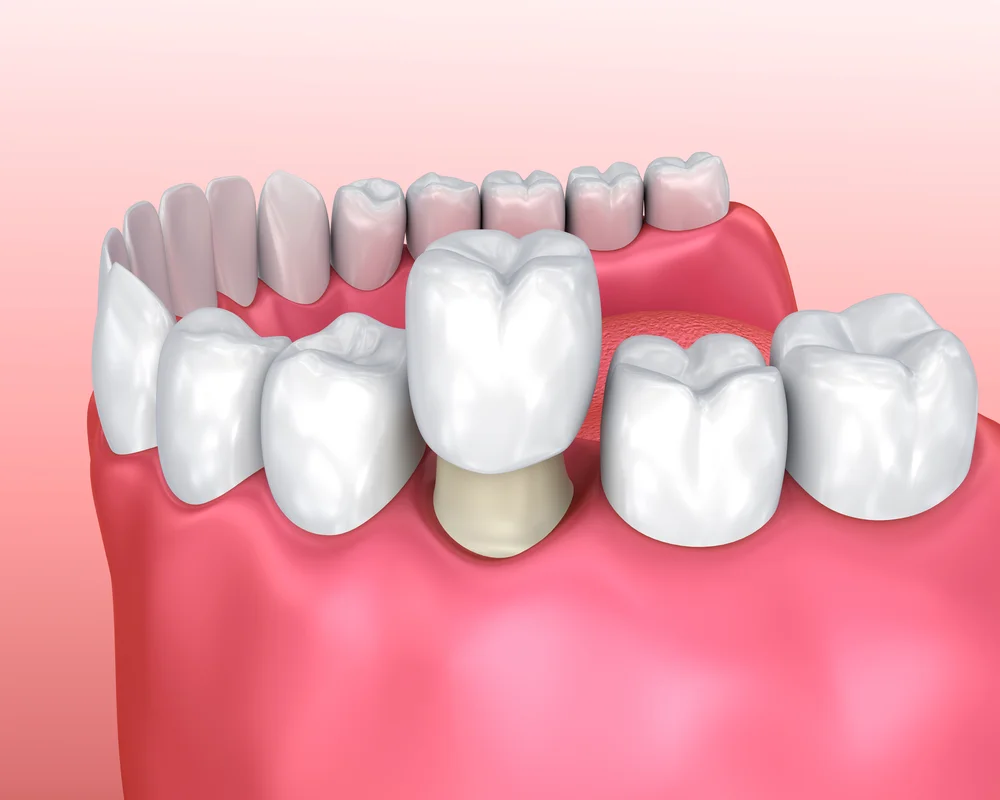
A damaged or weakened tooth does not always need to be extracted. When a tooth has been significantly broken down by decay, a crack, or a failed large filling, a dental crown in Thornhill may be exactly what restores it to full function and appearance.
At MiNa Family Dentistry, Dr. Neda Kadivar brings more than 20 years of experience to every crown case, guiding patients through the process from the first consultation through final placement with clear explanations at every step.
What Is a Dental Crown?
A dental crown is a full-coverage restoration that fits over the entire visible portion of a natural tooth, from the gumline up. Think of it as a protective cap that replaces the outer surface of the tooth while the original root remains in place. Once cemented, a well-made crown looks, feels, and functions like a natural tooth.
Crowns are one of the most versatile restorations in dentistry. They can salvage a tooth that would otherwise require extraction, improve the appearance of a severely discoloured or misshapen tooth, and anchor a dental bridge or top an implant post.
When Is a Dental Crown Needed?
Dr. Kadivar recommends a dental crown in Thornhill when the damage or structural weakness of a tooth goes beyond what a filling can reliably address. Common situations include teeth after root canal therapy (which lose moisture and become brittle over time), cracked tooth syndrome (where a crown holds the tooth together and prevents the crack from spreading), large filling failure (where not enough healthy structure remains to support a new filling), severely decayed teeth (where decay has destroyed more than about 50 percent of the tooth structure), implant restorations (where a custom crown attaches to the implant post placed by Dr. Adibrad), and cosmetic improvement (correcting severe discolouration or reshaping a tooth).
Crown Materials: Porcelain, Porcelain-Fused-to-Metal, and Zirconia
The material used for your crown affects both how it looks and how long it lasts. Dr. Kadivar will recommend the best option based on which tooth is being restored, your bite forces, and your aesthetic goals.
All-porcelain crowns are the most translucent and blend seamlessly with natural enamel — an excellent choice for front teeth where cosmetics are the priority. Porcelain-fused-to-metal crowns have a metal substructure that provides exceptional strength for back teeth, though a thin dark line can occasionally appear at the gumline as gums recede over time. Zirconia crowns are now the most commonly placed option, combining the strength advantages of metal with the natural appearance of porcelain, making them suitable for both front and back teeth.
| Material | Appearance | Strength | Best For | Approximate Lifespan |
|---|---|---|---|---|
| All-porcelain (ceramic) | Excellent, most natural | Moderate | Front teeth, low-stress areas | 10–20 years |
| Porcelain-fused-to-metal (PFM) | Good (metal margin may show at gumline) | High | Posterior teeth, bridges | 15–20+ years |
| Zirconia | Excellent, highly aesthetic | Very high | Any tooth, especially molars | 15–25+ years |
Colour-Matching Your Crown
Before your crown is fabricated, our team takes a shade measurement of the surrounding teeth using a dental shade guide. Digital photographs are also taken and sent to the dental laboratory along with the impressions or digital scan so the technician can blend the porcelain layers to match your natural tooth colour, translucency, and surface texture. The goal is a crown that is indistinguishable from the teeth beside it.
The Two-Appointment Crown Process at MiNa Family Dentistry
Most dental crowns in Thornhill require two visits spread approximately two to three weeks apart.
Appointment 1: Tooth Preparation
Dr. Kadivar administers local anaesthetic so you are completely comfortable throughout. She then removes a thin, even layer of tooth structure from all surfaces of the tooth to create room for the crown material — typically 1–2 millimetres, depending on the material chosen.
Once the tooth is shaped, either a conventional putty impression or a digital intraoral scan is taken and sent to the dental laboratory. A temporary crown fabricated from acrylic resin is placed over the prepared tooth to protect it and maintain your appearance and bite while the final crown is being made.
Appointment 2: Final Placement
When the laboratory crown returns, Dr. Kadivar removes the temporary, cleans the prepared tooth, and tries in the final crown. She checks the fit at the margins, the contacts with adjacent teeth, and the bite. Any minor adjustments are made chairside. Once everything is verified, the crown is permanently cemented or bonded in place. You leave with a fully restored, functional tooth.
Caring for Your Dental Crown
A crown covers and protects the tooth above the gumline, but the area where the crown meets the gum and the underlying root are still vulnerable to decay and gum disease. Good home care habits extend the life of any crown significantly.
Brush twice daily and floss around the crown every day, sliding the floss under the gumline rather than snapping it. Avoid chewing on very hard foods such as ice, hard candies, or popcorn kernels that can chip porcelain. If you grind or clench your teeth at night, ask Dr. Kadivar about a custom night guard — bruxism is one of the leading causes of premature crown failure. With proper care, zirconia and porcelain-fused-to-metal crowns routinely last 15 to 25 years or longer before replacement becomes necessary.
Crown on a Natural Tooth vs. Crown on a Dental Implant
A crown on a natural tooth is cemented or bonded over the prepared root-supported tooth structure. A crown on an implant is attached to a small connector piece called an abutment that screws into the titanium implant post in your jawbone. The implant crown requires no alteration of any adjacent teeth, preserves full jawbone stimulation, and can be designed to emerge from the gum tissue in a way that closely mimics a natural tooth root. Dr. Adibrad places the implant and, once integration is complete, Dr. Kadivar delivers the final implant crown.
Cost of a Dental Crown in Thornhill
Crown fees in the Greater Toronto Area typically range from $1,200 to $2,000 or more per crown, depending on the material, the tooth position, and the complexity of the case. Most Ontario dental insurance plans cover a portion of crown treatment, usually around 50 percent of the procedure fee up to the plan's annual maximum. Coverage frequency limits typically apply, often one crown per tooth every five years.
MiNa Family Dentistry will provide you with a detailed written estimate before treatment begins and can assist with a pre-authorization (predetermination) submission to your insurer so you know your out-of-pocket cost in advance. Fees in our office follow the Ontario Dental Association fee guide.
Watch & Learn
Further Reading
ADA: Dental CrownsFrequently Asked Questions
Ready to get started?
MiNa Family Dentistry
7191 Yonge St Unit 205, Thornhill, ON L3T 0C4
(289) 597-7191
Mon–Thu 9:00 AM–6:00 PM | Fri 9:00 AM–3:00 PM