

Tooth-Coloured Fillings Thornhill: Mercury-Free Composite Restorations at MiNa Family Dentistry
Same-visit composite fillings — invisible, mercury-free, and done in a single appointment.
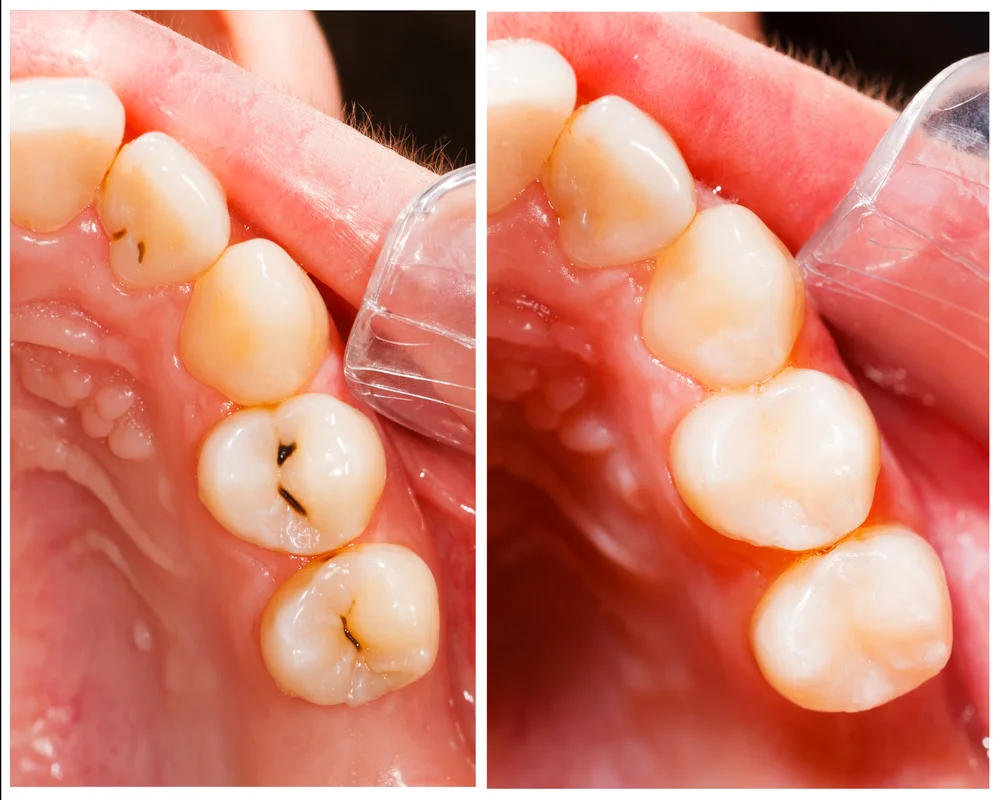
Cavities are among the most common dental problems for children and adults alike, but the way they are treated has changed considerably over the last two decades. At MiNa Family Dentistry, Dr. Neda Kadivar uses only tooth-coloured fillings in Thornhill — composite resin restorations that blend invisibly with your natural tooth, bond directly to the enamel and dentin, and contain no mercury or metal.
If you have a cavity or an old silver filling you would like replaced, you can expect a comfortable, efficient appointment and a result that looks like nothing was ever there.
What Is a Composite (Tooth-Coloured) Filling?
A composite filling is a mixture of a resin matrix and fine glass or ceramic particles that can be sculpted directly onto a tooth and then hardened with a curing light. The shade of the composite is selected to match the surrounding tooth structure so precisely that most people cannot tell a composite filling from natural enamel at conversational distance.
Composite resin is used for cavities in both front and back teeth, to repair chipped or cracked teeth, and to close small gaps or reshape tooth surfaces in a procedure known as dental bonding. It is versatile, durable, and requires less drilling than older amalgam-based restorations.
Why MiNa Family Dentistry Uses Only Composite — No Amalgam
Dr. Kadivar made the deliberate choice to practice amalgam-free dentistry. The bonding mechanism of composite is a practical advantage beyond aesthetics. Because the material bonds directly to the tooth, Dr. Kadivar can remove only the decayed tissue — not healthy tooth structure around it. That means smaller, more conservative restorations and a stronger remaining tooth.
| Feature | Composite Resin | Amalgam (Silver) |
|---|---|---|
| Appearance | Tooth-coloured, virtually invisible | Silver-grey, visible when you laugh or speak |
| Mercury content | None | Contains approximately 50% mercury by weight |
| Bonding to tooth | Bonds chemically and mechanically to tooth structure | Does not bond; requires undercuts for retention |
| Tooth removal required | Minimal | More healthy tooth must be removed to create retentive shape |
| Tooth strengthening | Can reinforce remaining tooth structure | Can cause micro-fractures in tooth over time |
| Environmental impact | No mercury disposal concerns | Mercury waste requires special handling |
Signs You May Have a Cavity
Many cavities — especially in their early stages — cause no symptoms at all. That is why regular check-ups with X-rays are so important for catching decay before it requires larger treatment. When symptoms do appear, they may include sensitivity to sweet, hot, or cold foods that lingers for more than a few seconds, a visible dark spot, hole, or rough area on the tooth surface, pain when biting down, a tooth that catches your tongue due to an irregular surface, or a broken or loose old filling that allows bacteria into the underlying tooth.
If you notice any of these signs, early treatment with a tooth-coloured filling in Thornhill is almost always simpler, less expensive, and less invasive than waiting. A small cavity that requires a filling today could become a large cavity requiring a crown — or an infected pulp requiring root canal therapy — if left untreated for months.
The Composite Filling Procedure: Step by Step
Placing a tooth-coloured filling in Thornhill at MiNa Family Dentistry typically takes 30 to 60 minutes per tooth and is completed in a single visit.
| Step | What Happens |
|---|---|
| 1. Anaesthetic | Local anaesthetic is administered so you feel no pain during the procedure |
| 2. Decay removal | Dr. Kadivar uses a dental handpiece and/or hand instruments to remove all decayed tissue. The tooth is rinsed clean. |
| 3. Tooth conditioning | A mild acid gel etches the tooth surface briefly, then a bonding agent is applied and light-cured |
| 4. Composite placement | The tooth-coloured composite is placed in layers, each layer shaped and cured with the blue curing light |
| 5. Final shaping | Dr. Kadivar refines the shape with burs and finishing strips to match the natural tooth contours |
| 6. Bite check | You bite on articulating paper and Dr. Kadivar adjusts the surface so the bite feels perfectly balanced |
| 7. Polish | The composite is polished to a smooth, natural-looking finish |
Early vs. Late Cavity Treatment: Why Timing Matters
A cavity is progressive. Untreated decay does not stay small — it spreads inward toward the nerve of the tooth. Treating a cavity when it is small costs less, preserves more natural tooth, and takes less time in the chair.
| Stage of Decay | What Is Affected | Treatment Needed |
|---|---|---|
| Enamel cavity | Outer layer of tooth | Small composite filling |
| Dentin cavity | Inner layer beneath enamel | Moderate composite filling |
| Large dentin cavity | Majority of tooth structure lost | Composite or inlay/onlay, possibly a crown |
| Pulp involvement (pulpitis) | Nerve and blood supply | Root canal therapy + crown |
| Abscess | Infection spreading beyond tooth | Root canal or extraction |
How Long Do Tooth-Coloured Fillings Last?
Composite fillings placed in back teeth typically last 7 to 12 years under normal conditions. Factors that affect longevity include the size of the filling, the location, your bite and whether you grind your teeth, your oral hygiene habits, and how frequently you see the dentist for monitoring.
With excellent home care and regular check-ups, many composite fillings last well beyond 12 years. When a filling eventually wears, chips, or develops a secondary cavity at its margin, it can usually be replaced with a new composite — or, if the decay is too extensive, with a larger restoration such as an inlay, onlay, or crown.
Inlays and Onlays: When a Filling Is Not Quite Enough
If a cavity is too large for a direct composite filling but does not require a full crown, Dr. Kadivar may recommend a composite or ceramic inlay or onlay. These are indirect restorations — made in the laboratory to precise dimensions and then cemented or bonded into place. An inlay fits within the cusps of the tooth (the raised points on a molar), while an onlay covers one or more cusps and may extend over part of the biting surface.
Inlays and onlays are stronger than a large direct composite filling because the laboratory-processed material is denser and the fit is more precise. They are an excellent intermediate option between a filling and a crown.
Cost of Tooth-Coloured Fillings in Thornhill and Insurance Coverage
The cost of a composite filling in Thornhill typically ranges from $150 to $350 per tooth, depending on the size of the cavity (measured in surfaces) and the tooth position. Most Ontario dental benefit plans classify composite fillings for back teeth as basic restorative work and cover 80 to 100 percent of the fee, making them one of the most well-covered dental treatments available. Some older plans still pay only the amalgam rate for posterior composite fillings; we will confirm your exact coverage during the predetermination process.
MiNa Family Dentistry fees follow the Ontario Dental Association fee guide.
Further Reading
ADA: Composite FillingsRelated Services
Frequently Asked Questions
Ready to get started?
MiNa Family Dentistry
7191 Yonge St Unit 205, Thornhill, ON L3T 0C4
(289) 597-7191
Mon–Thu 9:00 AM–6:00 PM | Fri 9:00 AM–3:00 PM