

Root Canal Therapy Thornhill: Save Your Tooth Without the Fear at MiNa Family Dentistry
Modern root canal therapy — comfortable, efficient, and performed by a 20-year specialist.
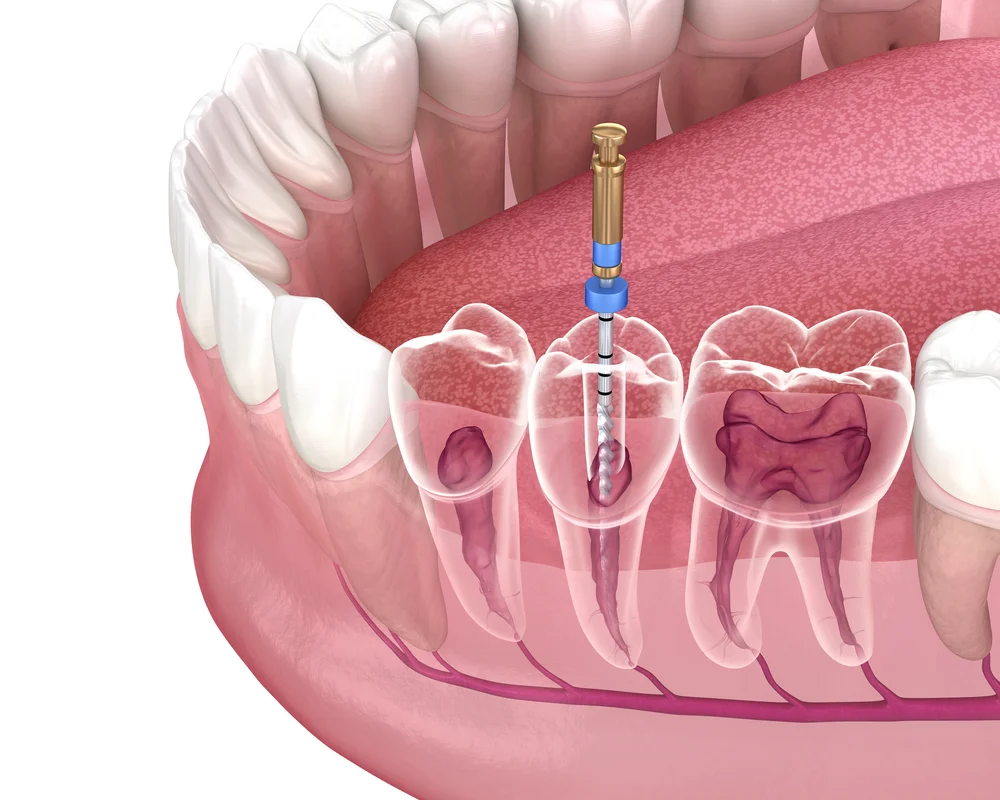
Root canal therapy in Thornhill has a reputation it does not deserve. For decades, the phrase alone was enough to make patients delay treatment — often until a manageable infection became a serious health concern. The truth is that modern root canal therapy, performed with today's local anaesthetics and rotary instrumentation, is no more uncomfortable than having a cavity filled. What actually hurts is the infected tooth before treatment.
Dr. Neda Kadivar at MiNa Family Dentistry has performed root canal therapy for over 20 years, treating patients with care, efficiency, and a firm commitment to making sure they are fully comfortable before a single instrument is used.
What Is Root Canal Therapy?
Every tooth contains a soft tissue core called the pulp, which runs from the visible crown of the tooth down through one or more canals in the root to the surrounding bone. The pulp contains nerves, blood vessels, and connective tissue that helped the tooth develop. Once a tooth is fully mature, it can survive without the pulp — the surrounding bone and periodontal ligament continue to nourish it.
Root canal therapy — also called endodontic treatment — is the procedure that removes infected, inflamed, or necrotic (dead) pulp tissue from inside the tooth, cleans and shapes the empty canals, fills them with a biocompatible material, and seals the tooth to prevent reinfection. The result is a healthy, pain-free tooth that can remain in your mouth for life with proper restoration and care.
When Is Root Canal Therapy Needed?
Root canal therapy in Thornhill is indicated when the pulp of the tooth has been compromised beyond repair. Irreversible pulpitis involves inflammation of the pulp that does not resolve with conservative treatment — symptoms often include a deep, lingering ache, sensitivity to heat that persists for 30 seconds or longer, and spontaneous pain that may wake you at night. Pulp necrosis occurs when the pulp tissue has died, typically following untreated pulpitis or physical trauma; a necrotic tooth may be symptom-free for a period, then develop an acute abscess suddenly.
A dental abscess is a collection of pus at the tip of the root caused by bacterial infection spreading from the pulp into the surrounding bone. Deep decay reaching the pulp introduces bacteria directly into the pulp chamber. A crack that extends into the pulp allows bacteria to enter from the oral environment. If you are experiencing significant swelling or pain, contact MiNa Family Dentistry at (289) 597-7191 as soon as possible — we prioritize patients in pain.
The Truth About Root Canal Pain
The persistent myth that root canal therapy is an agonizing procedure is based largely on the experience of people who had treatment decades ago, before modern anaesthetics, before rotary nickel-titanium file systems, and before today's understanding of managing patient anxiety. Multiple large-scale patient surveys consistently show that patients rate root canal therapy as no more painful than having a filling placed.
What patients are actually afraid of is the pain they already have from the infected tooth — not the procedure itself. Root canal therapy relieves that pain. Most patients leave the appointment feeling dramatically better than when they arrived.
The Root Canal Therapy Process: Step by Step
Root canal therapy in Thornhill at MiNa Family Dentistry is typically completed in one to two appointments, depending on the complexity of the case.
| Step | What Happens |
|---|---|
| 1. Diagnosis and X-ray | Dr. Kadivar takes periapical X-rays to evaluate the root anatomy, the extent of infection, and the surrounding bone. In some cases a CBCT scan provides additional three-dimensional information. |
| 2. Local anaesthetic | A profound local anaesthetic block is administered. Dr. Kadivar does not proceed until you are completely numb. |
| 3. Rubber dam placement | A thin rubber sheet is placed around the tooth to isolate it from saliva, keeping the area sterile and preventing irrigants from reaching the throat. |
| 4. Access opening | A small opening is made through the crown of the tooth to reach the pulp chamber. |
| 5. Pulp removal | The diseased pulp tissue is removed from the chamber and each canal using hand and rotary files. |
| 6. Canal shaping | Nickel-titanium rotary files are used to shape each canal to a consistent taper that allows thorough cleaning and proper obturation. |
| 7. Irrigation | Each canal is flushed with sodium hypochlorite and other irrigants to disinfect the canal system, remove debris, and dissolve any remaining tissue. |
| 8. Obturation | The shaped canals are dried and filled with a rubber-like material called gutta-percha, packed with a sealer to fill any spaces and create a hermetic seal that prevents reinfection. |
| 9. Temporary or permanent seal | A temporary filling or permanent composite is placed to seal the access opening. |
| 10. Crown placement | Two to three weeks later, a dental crown is placed to protect the tooth from fracture and restore full function. |
Multi-Rooted Teeth: Understanding Canal Anatomy
Tooth anatomy directly affects how long and complex a root canal procedure is. Front teeth are simpler; back teeth are more involved. Upper molars frequently have four canals rather than three, and identifying all canals with thorough X-ray interpretation is a critical part of the procedure — missed canals are a leading cause of root canal failure and the need for retreatment.
| Tooth Type | Number of Roots | Typical Number of Canals |
|---|---|---|
| Upper front teeth (incisors) | 1 | 1 |
| Upper canines | 1 | 1 |
| Upper premolars | 1–2 | 1–2 |
| Upper molars | 3 | 3–4 |
| Lower front teeth (incisors) | 1 | 1–2 |
| Lower canines | 1 | 1 |
| Lower premolars | 1 | 1–2 |
| Lower molars | 2 | 3–4 |
Success Rate and Long-Term Outcomes
Root canal therapy has a success rate of greater than 95 percent when the tooth is properly treated, sealed, and restored with a crown. The tooth can then function for the rest of the patient's life alongside natural teeth. The crown is not optional — a root canal-treated molar without a crown has a dramatically higher fracture rate, sometimes within one to two years of treatment. The crown protects the brittle, dehydrated tooth structure and is considered an essential part of the complete treatment.
What Happens If You Do Not Treat an Infected Tooth?
An infected tooth does not heal on its own. Without root canal therapy or extraction, the abscess enlarges and the surrounding bone is destroyed. The infection can spread to adjacent teeth and surrounding jaw tissue. In serious cases, dental infection can spread to the neck, the airway, or beyond — conditions that can be life-threatening and require emergency hospitalization. Chronic low-grade dental infection has also been associated in research with systemic health impacts.
Antibiotics prescribed by a dentist can temporarily reduce swelling and slow infection, but they do not eliminate the source of the problem inside the tooth. Definitive treatment — root canal therapy or extraction — is always required.
Root Canal Retreatment
Occasionally, a tooth that has previously had root canal therapy becomes painful or infected again. This can happen if a canal was initially missed or incompletely cleaned, if the coronal seal (the filling or crown) was lost or leaked allowing bacteria to recontaminate the canal, if new decay developed exposing the root canal system to oral bacteria, or if complex canal anatomy prevented full disinfection on the first attempt.
Retreatment involves reopening the tooth, removing the existing gutta-percha fill, renegotiating and reshaping the canals, and obturating again. The success rate for retreatment is somewhat lower than for initial root canal therapy but still high enough that retreatment is almost always worth attempting before considering extraction. If a retreat is unlikely to succeed, a surgical procedure called an apicoectomy (root-end surgery) may be an option — performed by Dr. Mehdi Adibrad, our dental surgeon with an MSc in periodontics.
Cost of Root Canal Therapy in Thornhill and Insurance Coverage
Root canal therapy fees in the Greater Toronto Area depend primarily on which tooth is being treated and how many canals it contains. Most Ontario dental benefit plans cover root canal therapy under basic or major restorative benefits at a reimbursement rate of 50 to 80 percent of eligible fees. The crown that follows is typically covered at 50 percent under major restorative benefits. MiNa Family Dentistry will provide a detailed estimate and submit a predetermination to your insurer before treatment begins.
When weighing the cost, consider that root canal therapy plus a crown allows you to keep your natural tooth indefinitely. Extraction followed by an implant and crown typically costs more in total, and extraction followed by no replacement leads to tooth shifting, bone loss, and potential bite problems over time.
| Tooth | Approximate Fee Range |
|---|---|
| Anterior (front) tooth — 1 canal | $800 – $1,000 |
| Premolar — 1–2 canals | $900 – $1,200 |
| Molar — 3–4 canals | $1,200 – $1,500+ |
Watch & Learn
Further Reading
AAE: Root Canal TreatmentRelated Services
Frequently Asked Questions
Ready to get started?
MiNa Family Dentistry
7191 Yonge St Unit 205, Thornhill, ON L3T 0C4
(289) 597-7191
Mon–Thu 9:00 AM–6:00 PM | Fri 9:00 AM–3:00 PM