

Dental Implant vs Denture: Which Is Right for You?
If you are missing several teeth, or a full arch, you have probably come across two very different solutions: dental implants and dentures. Both replace missing teeth and restore your smile, but they feel, function, and are cared for quite differently.
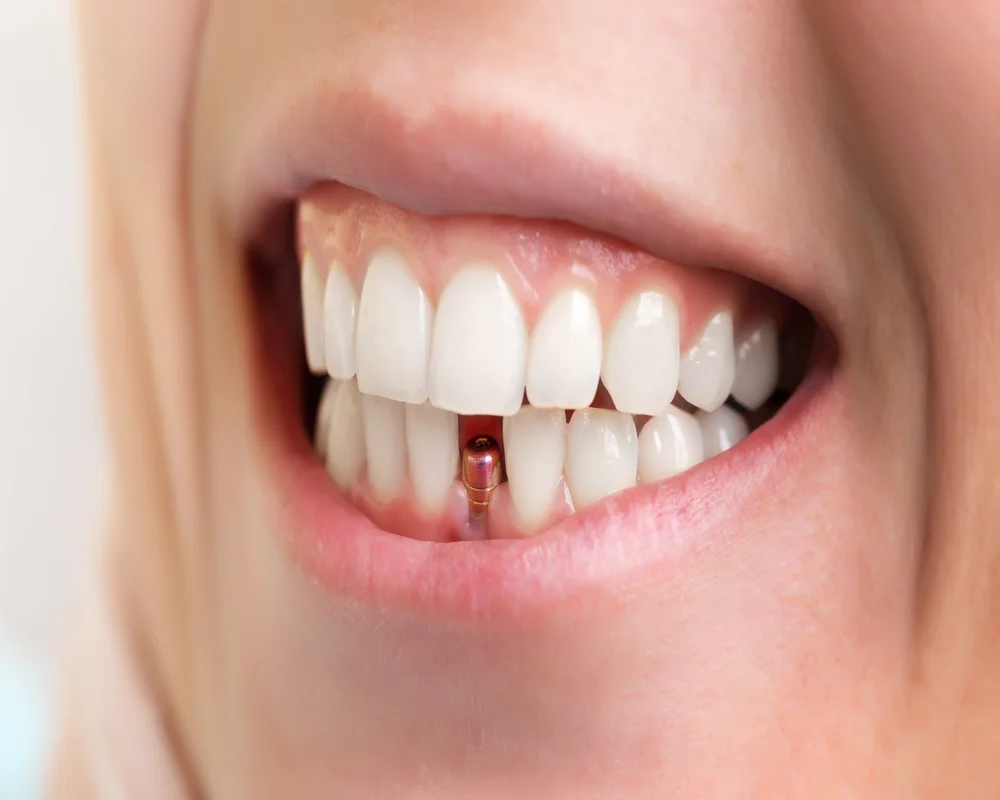
This guide compares implants and dentures across the things that matter most — stability, cost, bone health, and day-to-day life — so you can decide what fits your priorities. It is general information; the right choice for you is best confirmed after an examination. For the wider context, see our overview of dental implants in Thornhill.
What Each Option Is
A denture is a removable appliance that replaces missing teeth, resting on the gums and, for a full arch, held by suction or a little adhesive. It can be taken out for cleaning and at night.
Dental implants replace the roots of missing teeth with titanium posts placed in the jaw. They can support individual teeth, a fixed bridge, or a denture that clips firmly onto implants. Because they are anchored in bone, implant solutions stay put rather than resting on the gums.
There Is Also a Middle Option
It is not strictly implants versus dentures, because the two can be combined. An implant-supported denture uses a small number of implants to hold a denture securely in place, giving much of the stability of implants with some of the practicality of a denture.
This can be a good compromise for people who find a conventional denture loose but do not want, or are not suited to, an implant for every tooth. Our page on implant-supported dentures explains how it works.
Side-by-Side Comparison
Every mouth is different, but this table gives a general sense of how conventional dentures and implant solutions compare.
| Factor | Dental implants | Conventional denture |
|---|---|---|
| Stability | Fixed / firmly anchored | Rests on gums; can move |
| Removable? | Usually fixed | Yes |
| Helps preserve jawbone? | Yes | No |
| Upfront cost | Higher | Lower |
| Treatment time | Several months | Weeks |
Stability and Everyday Life
For many people this is the deciding factor. Implants and implant-supported solutions stay firmly in place, so you can eat a wider range of foods and speak without worrying about movement.
A conventional denture is a well-established option and works well for many patients, but some find it moves during eating or speaking, particularly a lower denture. Adhesives can help, but not everyone finds them ideal.
Bone Health Over Time
When teeth are missing, the jawbone in that area tends to shrink over time because it is no longer stimulated by tooth roots. Implants replace that stimulation in the areas where they are placed, which helps preserve the bone.
A conventional denture rests on top of the gums and does not stimulate the bone in the same way. Over years, bone changes can also affect how well a denture fits, which is why dentures sometimes need adjusting or relining.
Cost, Care, and Practicalities
Dentures usually cost less upfront and are quicker to make, which makes them the practical choice for some people. Implants generally cost more at the start and take longer because of the healing period, though they need no adhesives and are cared for more like natural teeth. For what drives implant pricing, see our guide to dental implant cost.
Care differs too. Dentures are removed and cleaned separately, often over a basin of water so they are not damaged if dropped, while fixed implants are brushed and cleaned in the mouth much like natural teeth. Neither is difficult; they are simply different routines, and your dentist or hygienist will show you whichever one applies to you.
Which Might Suit You?
There is no single right answer, and both options help many people. An implant or implant-supported solution may appeal if stability, bone preservation, and a fixed feel matter most to you. A denture may suit if a lower upfront cost and a quicker, non-surgical route are the priority, or if health factors make surgery less suitable.
The best way to choose is a consultation, where your gums, bone, and priorities can be assessed together and the options explained clearly.
Adjusting to Each Option
It is worth thinking about the settling-in period as well as the long term. With a new conventional denture, most people go through an adjustment phase as they get used to the feel, learn to eat with it, and adapt their speech; this usually improves over the first weeks, and occasional adjustments help the fit.
With implants and implant-supported solutions, there is a healing period after surgery, but once the final teeth are fitted they tend to feel stable and natural quite quickly, because they do not move. Neither experience is better or worse — they are simply different, and knowing what to expect helps you choose with confidence.
Health Factors That Influence the Choice
Your general and oral health also play a part. Implants involve minor surgery and a healing period, so conditions that affect healing, or habits such as smoking, are considered during planning. In some situations a denture, or an implant-supported denture using fewer implants, may be the more practical route.
This is exactly the kind of thing a consultation sorts out. Rather than deciding from a web page, an examination lets your dentist weigh your gum and bone health, your medical history, and your priorities together, and then recommend what genuinely fits you.
Talk It Through at MiNa Family Dentistry
At MiNa, implant surgery is led by Dr. Mehdi Adibrad, a periodontist and dental surgeon with an MSc in Periodontics and Implantology, with denture and restorative care provided by Dr. Neda Kadivar.
To weigh up your options, request a consultation or call (289) 597-7191. MiNa Family Dentistry is at 7191 Yonge St, Unit 205, Thornhill, ON L3T 0C4. This page is general information and is not a substitute for a personal examination.
Further Reading
Canadian Dental Association: oral health informationFrequently Asked Questions
Ready to get started?
MiNa Family Dentistry
7191 Yonge St Unit 205, Thornhill, ON L3T 0C4
(289) 597-7191
Mon–Thu 9:00 AM–6:00 PM | Fri 9:00 AM–3:00 PM