

Replacing All Your Upper Teeth With Dental Implants
Losing all of the teeth in your upper jaw, or facing that prospect, is a significant thing, and it affects eating, speaking, and confidence. The good news is that dental implants offer stable, natural-looking ways to restore a full upper arch, from fixed teeth to secure implant-supported dentures. The upper jaw does have some particular considerations, which careful planning addresses.
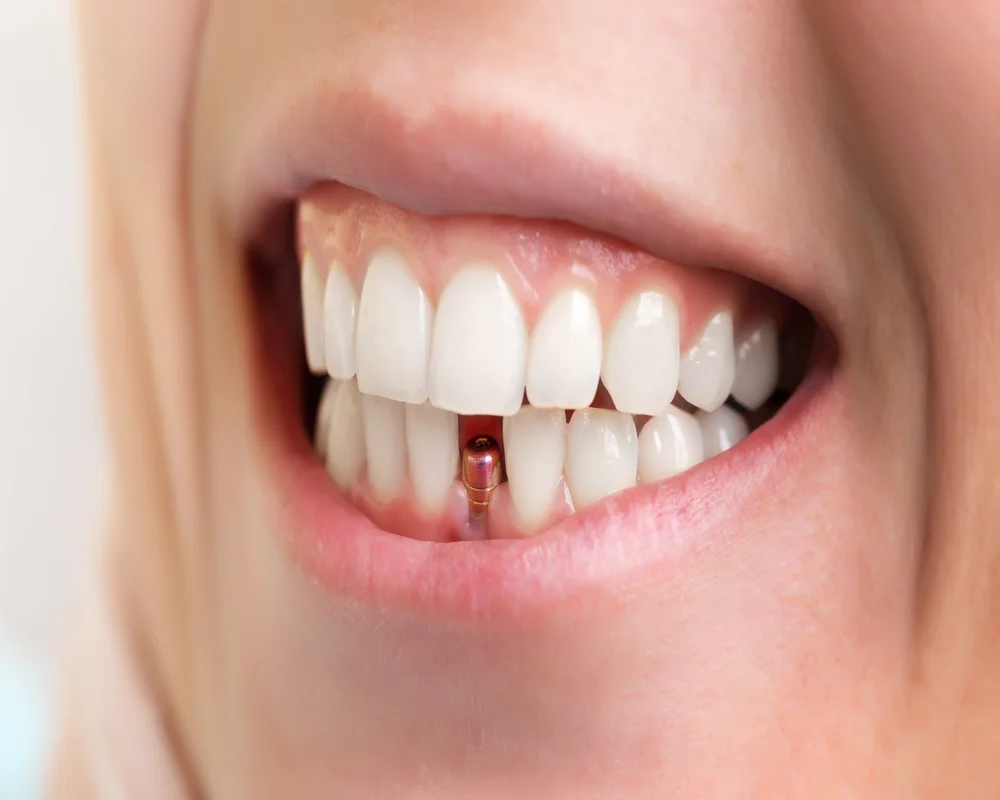
This guide explains the options for replacing all your upper teeth, what makes the upper jaw special, and what to expect. It is general information, and your own plan follows an examination. For the wider picture, see our overview of dental implants in Thornhill and our page on full-arch implants.
Options for a Full Upper Arch
There is more than one way to replace a full upper arch with implants, and the right choice depends on your jawbone, health, and priorities. Broadly, the options range from a fixed set of teeth supported by implants to a removable implant-supported denture that clips securely onto them.
A fixed full-arch restoration stays in place and feels closest to natural teeth, while an implant-supported (removable) denture offers great stability with the practicality of being removable for cleaning. Our guides on full-arch implants versus dentures and fixed versus removable implant dentures compare these in detail.
What Makes the Upper Jaw Different
The upper jaw has some features that influence implant treatment. The bone can be softer than in the lower jaw, and the maxillary sinuses sit above the back teeth, sometimes leaving limited bone height in that area after teeth are lost.
These are routine considerations rather than obstacles. Where bone height near the sinus is limited, a sinus lift may be part of the plan to build up the area. Careful assessment with imaging is how your dentist works out what your upper jaw needs.
A Full Set on a Few Implants
A common question is whether you need an implant for every tooth. The answer is no — a full upper arch of teeth can be supported by a smaller number of well-placed implants, rather than one per tooth. This makes full-arch treatment more achievable than many people expect.
The exact number of implants depends on your case and the type of restoration. Your dentist plans the positions carefully so the implants provide strong, balanced support for the full set of teeth above them.
The Benefits of Restoring the Upper Arch
Replacing a full upper arch with an implant solution can make a real difference to daily life. Compared with a conventional upper denture, implant-supported options offer notable benefits:
- Much greater stability for eating and speaking with confidence.
- For fixed options, no denture to remove and no need for adhesive.
- Often the ability to uncover the palate with certain designs, which some find more comfortable and better for taste.
- Help preserving the jawbone where implants are placed.
What the Process Involves
Restoring a full upper arch follows the usual implant stages, tailored to the upper jaw. After a consultation and detailed imaging, any preparation such as a sinus lift or grafting is carried out, then the implants are placed and left to heal, and finally the fixed teeth or denture are fitted.
A temporary solution is often provided so you are not without teeth during healing. Our step-by-step guide to the dental implant procedure explains the stages, which your dentist will adapt to your plan.
Cost and Planning Considerations
Full-arch treatment is a significant undertaking, and cost depends on the number of implants, the type of restoration, and any preparation such as a sinus lift. Because of this, a written estimate follows a thorough assessment. Our implant cost guide explains what affects the price.
Planning is central to a good outcome for a full arch, which is why detailed imaging and careful assessment matter so much. Your dentist will lay out the plan, timeline, and costs so you know what to expect before treatment begins.
Caring for a Full Upper Arch
How you care for your restored upper arch depends on whether it is fixed or removable. A fixed restoration is cleaned in the mouth, with attention to where the teeth meet the gum, while a removable implant denture is taken out to clean. Either way, regular check-ups keep the implants and tissues healthy.
Our guide on how to clean dental implants covers the routine. Good maintenance protects both the appearance and the longevity of your restored smile, though individual results vary.
More Than a New Set of Teeth
Restoring a full upper arch is a major step, and its impact tends to reach well beyond the mouth. People who have struggled with a loose upper denture, or with missing teeth, often describe the change in terms of confidence: eating in company without worry, speaking clearly, and smiling freely again. These everyday things matter enormously to quality of life.
It is worth keeping that bigger picture in mind through what can feel like a long process. The planning, any preparation such as a sinus lift, and the healing months are all in service of a result that many patients describe as genuinely life-changing. Being clear with your dentist about what you hope for helps them plan toward not just working teeth, but a smile and a sense of confidence you are happy to live with.
Restore Your Upper Smile at MiNa
Full-arch implant treatment at MiNa is led by Dr. Mehdi Adibrad, a periodontist and dental surgeon with an MSc in Periodontics and Implantology, with restorative and denture care from Dr. Neda Kadivar.
To explore your options, request a consultation or call (289) 597-7191. MiNa Family Dentistry is at 7191 Yonge St, Unit 205, Thornhill, ON L3T 0C4. This page is general information and is not a substitute for a personal examination.
Further Reading
Canadian Dental Association: oral health informationFrequently Asked Questions
Ready to get started?
MiNa Family Dentistry
7191 Yonge St Unit 205, Thornhill, ON L3T 0C4
(289) 597-7191
Mon–Thu 9:00 AM–6:00 PM | Fri 9:00 AM–3:00 PM