

Dental Implant Recovery Timeline: What to Expect
Once you decide to have a dental implant, it is natural to want a sense of the road ahead: how long will recovery take, and what happens at each stage? Knowing roughly what to expect makes the whole process feel more manageable and helps you plan around it. The honest headline is that implant treatment unfolds over months, with the most intensive recovery happening in just the first days.
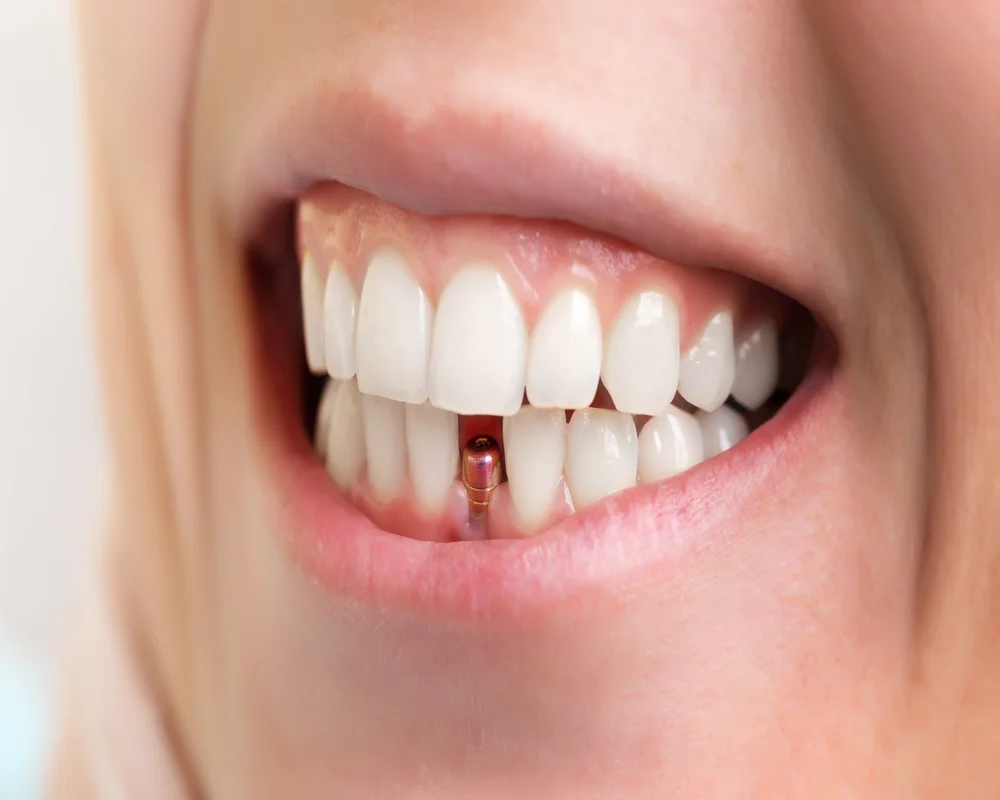
This guide walks through the recovery timeline stage by stage. Every case is different, so treat it as a general map rather than a fixed schedule — your dentist will give you a timeline tailored to your treatment. For the full treatment sequence, see our step-by-step guide to the dental implant procedure.
The First 24 to 48 Hours
The first day or two after implant placement is the most sensitive period. Some swelling, mild bleeding, and tenderness around the site are normal, and are usually managed with the aftercare your dentist provides. This is the time to rest, keep things gentle, and stick to cool, soft foods.
Following your instructions closely now sets up the rest of your recovery. That typically means avoiding vigorous rinsing, straws, and smoking, all of which can disturb the healing site. Our guide on what to eat after implant surgery covers this stage in detail.
The First Week
Over the first week, the initial swelling and discomfort usually settle steadily. Most people find they are feeling noticeably more comfortable within a few days, and many return to work and normal daily activities during this period, depending on the extent of their treatment and how they feel.
You will still be favouring soft foods and being gentle around the area, but day-to-day life generally gets back to normal fairly quickly. If you were given dissolvable or removable stitches, your dentist will let you know what to expect from them during this week.
Weeks Two to Four
By the second week, the gum tissue is usually healing well, and any early discomfort has typically faded. You can gradually return to a more normal diet as comfort allows, still avoiding very hard foods directly on the site until your dentist confirms it is ready.
Beneath the surface, the important long-term process is quietly underway: the bone is beginning to bond with the implant. This is not something you feel, but it is the foundation of the implant's stability, and it continues over the following months.
Osseointegration: The Main Healing Phase
The longest part of the timeline is osseointegration — the process where the jawbone grows around and fuses with the implant. This typically takes several months, and it cannot be rushed, because it is what gives the implant the strength to support a tooth.
The good news is that this phase asks little of you. You go about your normal life while it happens, keeping the area clean and attending any check-ups. In many cases a temporary tooth fills the gap during this time, so you are not left without a tooth while the implant settles.
Adding the Abutment and Crown
Once your dentist confirms the implant has integrated well, the final stages add the parts you can see. A connector called an abutment is attached, impressions or a scan are taken, and your final crown is made and fitted. This part is usually straightforward and not a major recovery event.
There may be a short period of getting used to the new tooth, but most people adapt quickly because the implant is stable. At this point, the long journey reaches its goal: a functioning, natural-looking tooth.
What Affects Your Recovery Time
Timelines vary from person to person, and several things influence them. Cases that involve an extraction, bone grafting, or a sinus procedure take longer, because those steps need their own healing time before or alongside the implant.
Your general health and habits matter too. Smoking, for example, can slow healing, while good general health and careful aftercare support it. This is why your dentist gives you a personalised timeline rather than a one-size-fits-all figure.
Helping Your Recovery Along
You can support your own healing at every stage. Following your aftercare instructions, keeping the area clean as directed, eating gentle foods early on, and avoiding smoking all help. Attending your follow-up appointments lets your dentist check that healing is on track.
It also helps to be patient with the process. The waiting during osseointegration can feel long, but it is doing essential work, and there is nothing you need to do to hurry it along beyond looking after the area. If anything concerns you at any point — worsening swelling, bleeding that does not settle, or a loose feeling — contact the clinic rather than waiting to see whether it passes on its own.
Why the Timeline Is Worth the Wait
For some people, the length of implant treatment is the hardest part to accept. In a world of quick fixes, waiting several months for the bone to bond with the implant can feel slow. But that waiting is not wasted time; it is the process that gives an implant its lasting strength.
It can help to reframe the timeline as an investment rather than a delay. The months of healing are what allow the implant to become a stable, functioning tooth that can serve you for years. Rushing that process would undermine the very thing that makes implants worthwhile, which is why dentists do not cut it short.
Plan Your Treatment at MiNa
Your dentist can give you a realistic recovery timeline for your specific case. Implant care at MiNa is led by Dr. Mehdi Adibrad, a periodontist and dental surgeon with an MSc in Periodontics and Implantology, alongside Dr. Neda Kadivar.
To discuss treatment, request a consultation or call (289) 597-7191. MiNa Family Dentistry is at 7191 Yonge St, Unit 205, Thornhill, ON L3T 0C4. This page is general information and is not a substitute for your dentist's instructions.
Further Reading
Canadian Dental Association: oral health informationFrequently Asked Questions
Ready to get started?
MiNa Family Dentistry
7191 Yonge St Unit 205, Thornhill, ON L3T 0C4
(289) 597-7191
Mon–Thu 9:00 AM–6:00 PM | Fri 9:00 AM–3:00 PM